

Banana roll fat is the crescent-shaped pocket of stubborn subcutaneous fat that sits directly beneath the buttocks, right where the lower glute meets the upper thigh. This area is notoriously resistant to diet and exercise—even people at their goal weight often notice this persistent bulge.
The name comes from the horizontal, curved shape of the fat deposit, which resembles a banana lying beneath the buttock crease. Below, we cover what causes banana rolls, who develops them, and the full range of treatment options from targeted exercises to surgical removal.
What is banana roll fat
Banana roll fat refers to the crescent-shaped pocket of stubborn subcutaneous fat that sits directly beneath the buttocks, right at the transition to the upper thigh. This area is notoriously difficult to tone through diet and exercise alone, which explains why so many people explore cosmetic options to smooth out the lower body silhouette. The name comes from the horizontal, curved shape of the fat deposit—it looks a bit like a banana lying beneath the buttock crease.
What makes banana roll fat particularly frustrating is that it’s subcutaneous fat, meaning it sits just under the skin rather than around your organs. Subcutaneous fat in this location tends to resist general weight loss efforts, much like a stubborn FUPA. You could be at your goal weight, exercising regularly, and still notice this pocket hanging on.
- Location: directly beneath the buttock crease at the gluteal fold
- Appearance: horizontal, curved bulge that creates a visible line
- Fat type: subcutaneous fat stored just under the skin
What causes banana roll fat
Several factors contribute to banana roll development, and here’s the thing—even people who are quite fit can have them. This isn’t simply about eating habits or gym attendance.
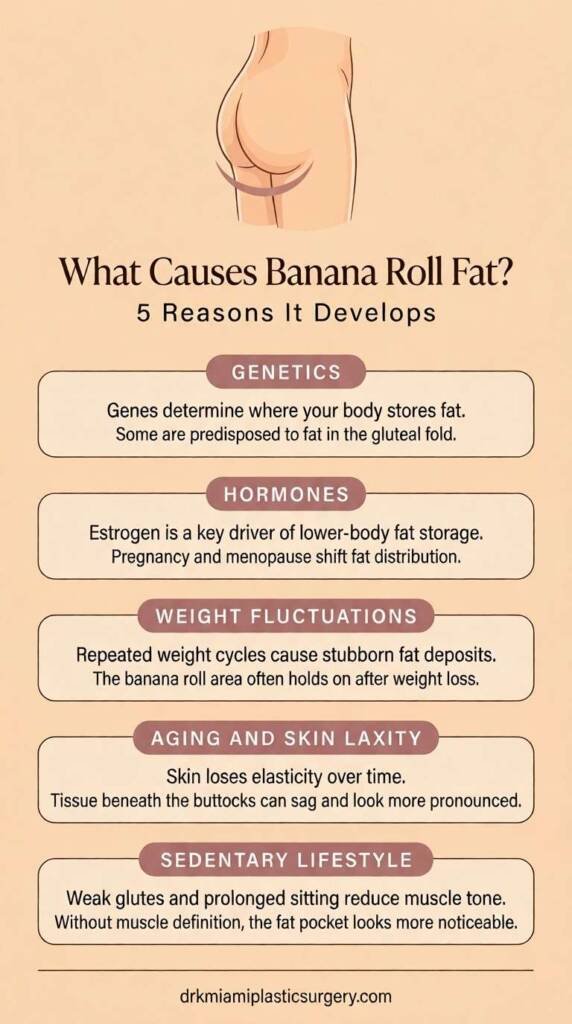
Genetics
Your genes largely determine where your body stores fat. Some people are predisposed to accumulating fat in the gluteal fold regardless of their overall weight. If your mother or grandmother had banana rolls, there’s a good chance you will too.
Hormones
Hormonal shifts from pregnancy, menopause, or natural aging can redirect fat storage toward the lower body—studies show postmenopausal women carry 20% more fat mass than premenopausal women. Estrogen is a critical determinant of body fat distribution, which is one reason women experience banana rolls more often than men.
Weight fluctuations
Repeated cycles of gaining and losing weight can cause fat to settle stubbornly in the banana roll area. Even after reaching your target weight, this region often holds onto its fat deposits.
Aging and skin laxity
As skin loses elasticity over time, the tissue beneath the buttocks can sag and make the roll appear more pronounced. The crease becomes more visible even when the actual fat volume hasn’t changed much.
Sedentary lifestyle
Weak gluteal muscles and prolonged sitting can worsen the appearance by reducing the muscle tone that supports the area. Without adequate muscle definition underneath, the fat pocket becomes more noticeable.
Is banana roll fat normal
Absolutely. Banana roll fat is extremely common and has nothing to do with your health or fitness level. People of all body types, ages, and activity levels develop this fat deposit. You might be in excellent shape and still notice a stubborn pocket beneath your buttocks.
The desire to address banana rolls is purely aesthetic. There’s nothing medically concerning about having them, and many patients feel relieved when they learn how widespread this concern actually is.
How to get rid of banana roll fat
Treatment options range from lifestyle changes to non-surgical procedures to surgical removal. However, this area requires a careful approach because removing too much fat can cause the buttocks to sag or flatten—definitely not the goal.
The right treatment depends on how much fat is present, your skin quality, and what you’re hoping to achieve. Some people do well with non-invasive options, while others see better results with surgical intervention.
Non-surgical banana roll fat treatments
Non-surgical options work well for patients with mild to moderate banana rolls who prefer minimal downtime. These treatments typically require multiple sessions and produce gradual results over several weeks to months.
Targeted exercise and diet
Exercise and diet alone rarely eliminate banana rolls completely, but strengthening the glutes and hamstrings can improve overall contour. Think of this as a complementary approach rather than a complete solution.
CoolSculpting
CoolSculpting uses cryolipolysis—controlled fat freezing—to permanently eliminate 20–25% of treated fat without surgery. The FDA has cleared this treatment specifically for the banana roll area.
- How it works: freezes and permanently destroys fat cells
- Downtime: minimal to none
- Results timeline: visible improvement develops over 2–3 months
Morpheus8 and radiofrequency skin tightening
Morpheus8 combines microneedling with radiofrequency energy to tighten skin while reducing small fat deposits. This option works best for patients with mild fat accumulation who also have some skin laxity concerns.
BodyTite
BodyTite uses minimally invasive radiofrequency-assisted lipolysis to melt fat while simultaneously tightening skin through a small incision. Consider this a middle ground between fully non-surgical treatments and traditional surgery.
Surgical banana roll removal options
Surgical treatments deliver the most dramatic and immediate results for moderate to significant banana roll fat. Because the gluteal fold is a delicate area, treating it requires precision to avoid complications like buttock sagging or asymmetry.
Banana roll liposuction
Liposuction uses a thin cannula to suction out fat cells permanently from the banana roll area. Surgeon skill and liposuction technique matter enormously here—removing too much fat can flatten the buttocks or cause sagging, while removing too little leaves underwhelming results.
Brazilian butt lift with fat transfer
A Brazilian Butt Lift removes fat from the banana roll area and transfers it to the buttocks for enhanced, long-lasting curves.
This fat transfer approach addresses the banana roll while simultaneously improving overall buttock shape and projection.
Buttock lift
A buttock lift removes excess skin and tightens the area, making it ideal when loose skin rather than fat is the primary concern. This procedure often suits patients who have experienced significant weight loss.
Lower body lift
A lower body lift is a comprehensive procedure that addresses the buttocks, thighs, and abdomen together. This body contouring option typically suits patients after major weight loss who have excess skin in multiple areas.
Best exercises to reduce banana roll fat
Exercise won’t eliminate banana rolls on its own, but strengthening the posterior chain can improve muscle tone and overall contour. Focus on movements that target the glutes and hamstrings.
1. Glute bridges and hip thrusts
Glute bridges and hip thrusts target the gluteus maximus to lift and support the buttock area. Aim for 3 sets of 12–15 repetitions, squeezing at the top of each movement.
2. Romanian deadlifts
Romanian deadlifts target the hamstrings and glutes precisely where they meet the banana roll zone. Keep your back straight and feel the stretch in your hamstrings as you lower the weight.
3. Reverse lunges
Reverse lunges activate the glutes and posterior thigh for improved tone. Stepping back rather than forward places more emphasis on the target muscles.
4. Cable kickbacks
Cable kickbacks isolate the lower glute and upper hamstring area. Use controlled movements rather than momentum for the best results.
5. Stair climbing and incline walking
Stair climbing and incline walking engage the glutes and hamstrings without requiring gym equipment. Aim for 20–30 minutes several times per week.
How much does banana roll liposuction cost in Miami
Banana roll liposuction in Miami typically ranges from $3,000 to $8,000, depending on several factors. Combining banana roll treatment with other procedures like a BBL can affect the total cost but often provides better overall value.
| Cost Factor | Impact on Price |
|---|---|
| Treatment area size | Larger areas require more time |
| Surgical technique | Advanced methods may cost more |
| Anesthesia type | General anesthesia adds to cost |
| Combination procedures | Bundling can reduce per-procedure cost |
Dr. K Miami Plastic Surgery provides personalized quotes during consultation so you understand exactly what’s included before making any decisions.
Who is a good candidate for banana roll removal
The best candidates for banana roll removal share certain characteristics that predict good outcomes:
- Stable weight: near your goal weight for at least 3–6 months
- Good skin elasticity: skin that can retract after fat removal
- Realistic expectations: understanding what results are achievable
- Non-smoker: or willing to quit 4–6 weeks before and after surgery
- Localized fat deposits: banana rolls that persist despite diet and exercise
Recovery timeline after banana roll liposuction
Recovery progresses through predictable stages, with most patients returning to normal activities within a few weeks.
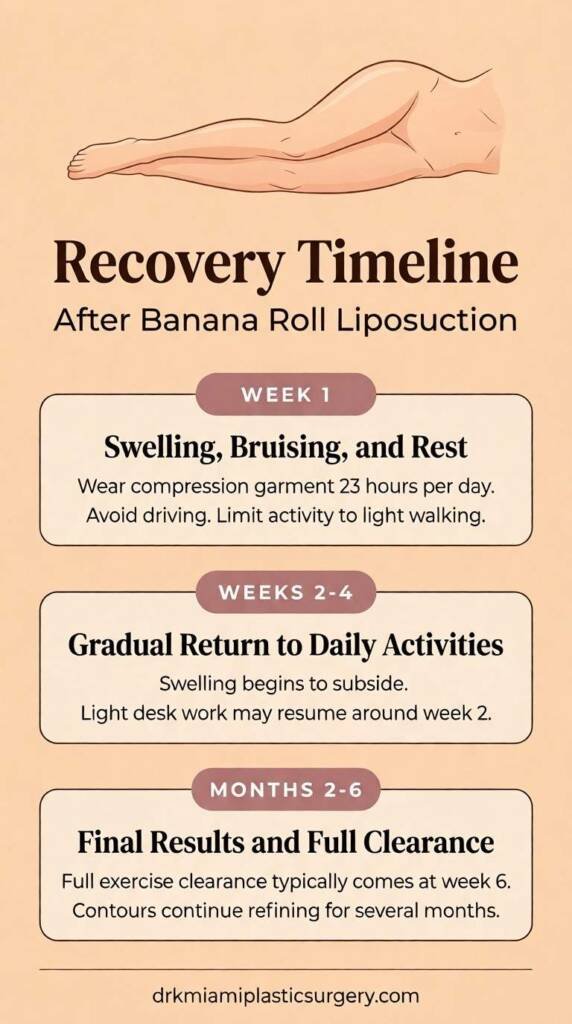
Week 1
Expect swelling, bruising, and mild discomfort during the first week. Wear your compression garment as directed—typically 23 hours per day. Avoid driving, postpone flying after surgery for at least 1–2 weeks, and limit activity to light walking around your home.
Weeks 2 to 4
Swelling begins to subside and you can gradually return to daily activities. Light desk work may resume around week 2, though strenuous exercise and heavy lifting remain off-limits.
Months 2 to 6
Final results become visible as swelling fully resolves. Clearance for full exercise typically comes around week 6, and contours continue refining for several months afterward.
Risks and considerations of banana roll surgery
All surgical procedures carry risks, though choosing a board-certified plastic surgeon significantly reduces potential complications.
Contour irregularities
Uneven fat removal can cause lumps or dents in the treated area. Skilled surgical technique and proper post-operative care reduce this risk substantially.
Fat necrosis
Fat necrosis occurs when fat cells die and form firm lumps under the skin. This complication is rare but possible after any liposuction procedure.
Asymmetry and sagging
Over-aggressive fat removal can cause the buttocks to sag or appear flat. Surgeon experience in this specific area matters considerably.
Recurrence with weight gain
While treated fat cells are gone permanently, significant weight gain can cause remaining fat cells to enlarge. Maintaining a stable weight protects your results long-term.
Schedule your banana roll consultation with Dr. K Miami
Taking the first step toward addressing banana roll concerns starts with a personalized consultation. Dr. K Miami Plastic Surgery focuses on safety, natural-looking results, and supporting you through every stage of your transformation.
Schedule your consultation today to discuss which treatment approach aligns with your goals.
Frequently asked questions about banana roll fat
Can men develop banana roll fat?
Yes. Though less common than in women, men can develop banana roll fat due to genetics and individual fat distribution patterns.
What is the difference between banana roll fat and cellulite?
Banana roll fat is a localized fat deposit beneath the buttocks, while cellulite refers to the dimpled skin texture caused by fat pushing against connective tissue bands.
Can walking alone eliminate banana rolls?
Walking improves overall fitness but rarely eliminates banana rolls because this area stores stubborn subcutaneous fat resistant to general cardiovascular exercise.
Will banana roll fat return after liposuction?
Fat cells removed during liposuction are gone permanently, but significant weight gain can cause remaining fat cells in the area to expand.
How long do banana roll liposuction results last?
Results are long-lasting as long as you maintain a stable weight—the removed fat cells do not regenerate.