
Key Takeaways
Kybella and neck lift surgery can both improve a double chin, but they address different causes and involve very different experiences.
- Kybella is a nonsurgical injectable treatment for fat beneath the chin.
- Neck lift surgery can address loose skin, muscle laxity, excess fat, and neck contour.
- Skin elasticity and the amount of sagging often matter as much as fat volume.
- Kybella typically involves less downtime, while surgery may create a more comprehensive change.
- A consultation can help match the treatment to your anatomy, goals, and comfort with recovery.
How Kybella and neck lift surgery work
The choice between these treatments begins with understanding what is creating fullness beneath the chin. Kybella focuses on submental fat, while a neck lift can reshape several layers of tissue. Neither option is automatically better for every person. The right approach depends on whether the main concern is fat, laxity, muscle banding, or a combination.
What Kybella does to submental fat
Kybella is an injectable treatment designed to reduce fat beneath the chin. Its active ingredient, deoxycholic acid, works in the treated fat, and the body gradually clears the affected cells. It does not remove loose skin or lift sagging tissue, so the skin’s ability to contract is part of the candidacy discussion.
Treatment is usually performed through a series of injections rather than one surgical procedure. The number of sessions varies according to the amount of fullness and the desired degree of change.
What a neck lift changes beneath the chin
A neck lift is a surgical procedure intended to improve the contour of the neck and the transition into the jawline. Depending on the individual anatomy, surgery may address excess skin, deeper soft tissue, muscle laxity, and fat. The procedure therefore has a broader range than an injectable treatment focused on fat alone.
Because surgery works directly on tissue that may be loose or displaced, it can be considered when aging changes extend beyond a small pocket of submental fullness. The exact technique, incision placement, and scope should be determined during an in-person evaluation rather than assumed from photographs or a general description.
How the procedures differ in invasiveness
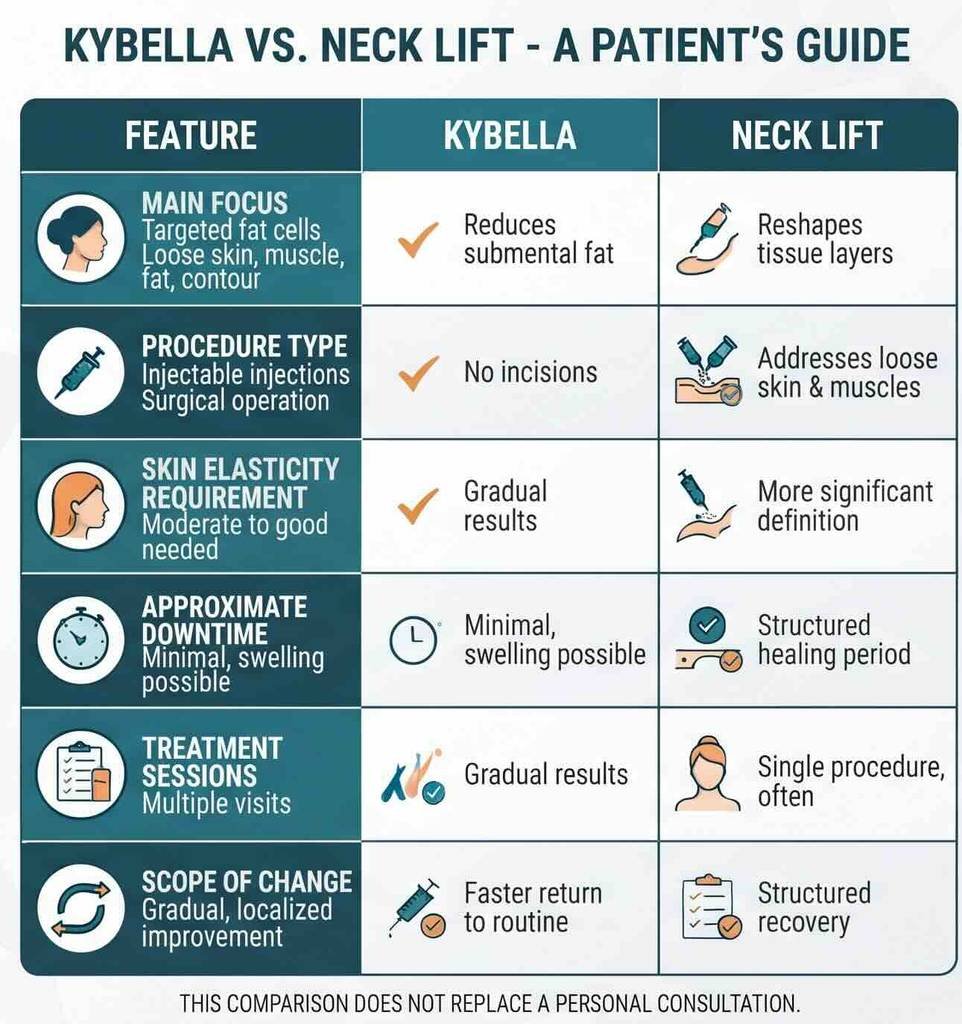
Kybella does not require incisions or general surgical recovery, although injections can still cause noticeable swelling and temporary discomfort. A neck lift involves incisions, anesthesia, and a structured healing period. That difference affects scheduling, activity restrictions, support needs, and how quickly a person feels comfortable in public.
Less invasive does not mean effortless, and surgery does not mean the result is automatically right. The more useful question is whether the treatment matches the problem being treated. Someone with good skin quality and isolated fullness may prefer injections, while someone with lax skin may find that a surgical plan better fits the desired correction.
Why skin quality and muscle laxity matter
Fat is only one part of neck appearance. When the skin has reasonable elasticity, reducing submental fullness may leave a smoother contour. When the skin hangs or the underlying muscles have loosened, reducing fat alone can leave laxity visible.
This is why a careful assessment should consider skin thickness, elasticity, neck bands, jawline definition, weight stability, and facial proportions. The cause of fullness matters more than the label placed on it. A personalized evaluation at Dr. K Miami Plastic Surgery can take those relationships into account while keeping safety and natural-looking balance central to the plan.
Who is a good candidate for each treatment
Candidacy is not determined by age alone or by the size of a double chin. It depends on anatomy, health, expectations, and the type of change a person wants. Some people are primarily bothered by a compact pocket of fat, while others see loose skin and a softer jawline after weight change or aging.
A consultation should also include an honest discussion of tradeoffs. The goal is not simply to choose the option with less downtime or the most dramatic reputation, but to select an approach that can address the actual source of the concern.
Candidates who may benefit from Kybella
Kybella may suit adults whose main concern is localized fat beneath the chin and whose skin has enough elasticity to settle after fat reduction. It can be appealing to people who want a nonsurgical option and are comfortable with gradual improvement rather than an immediate surgical change.
A suitable candidate should have realistic expectations about the number of treatments, temporary swelling, and the limits of an injectable. If loose skin or muscle laxity is the dominant issue, Kybella may not provide the definition the person hopes to see.
Candidates who may benefit from a neck lift
A neck lift may be more appropriate for someone with loose skin, muscle laxity, neck bands, excess fat, or a less defined jawline. Surgery can address several of these concerns together, which may make it a stronger fit when the neck looks aged or lax rather than simply full.
Good surgical candidates are generally healthy enough for the procedure and able to follow recovery instructions. They should also be prepared for incisions, swelling, bruising, temporary restrictions, and the possibility that the final contour will continue refining for some time.
When neither option may be appropriate
Neither treatment should be selected simply because a person feels pressured to change a normal feature. Unstable weight, untreated medical concerns, unrealistic expectations, or uncertainty about the goal can all be reasons to pause. A provider may recommend waiting, addressing another health issue, or considering a different approach.
The neck can also appear full because of anatomy that these procedures do not fully change. A consultation helps distinguish submental fat and laxity from other structural factors. It is reasonable to ask for a clear explanation of what the proposed treatment can and cannot improve.
How age, anatomy, and medical history affect candidacy
Age can influence skin elasticity, but it is only one variable. Genetics, prior weight loss, sun exposure, facial proportions, medication use, smoking, and previous procedures may all affect planning and healing. A younger person can have lax skin, and an older person may have relatively firm skin with a small amount of localized fat.
Medical history also matters because injections and surgery carry different considerations. A provider should review medications, allergies, healing history, and relevant conditions before recommending treatment. Dr. K Miami Plastic Surgery approaches aesthetic planning with an emphasis on personalized outcomes, patient safety, comfort, and support throughout the patient journey.
Comparing results and expectations
Results should be judged against the starting anatomy and the treatment’s actual scope. Kybella can reduce treated fat, but it does not tighten skin. A neck lift can create a more substantial change in contour when several tissues contribute to the problem, though it requires a greater commitment.
Neither procedure can stop natural aging or guarantee a permanent appearance. Stable weight, skin biology, and ongoing aging all influence how long a result remains pleasing. Clear expectations make it easier to appreciate an improvement without asking one treatment to do another treatment’s job.
How much fat reduction Kybella can provide
Kybella can gradually reduce submental fat in the areas treated. The visible change depends on the volume of fat, the number of treatment sessions, individual response, and the amount of skin retraction afterward. Improvement is not usually assessed immediately because swelling can temporarily obscure the contour.
For someone with mild to moderate fullness and relatively good skin quality, the gradual process may be a comfortable fit. For someone seeking a major change or dealing with substantial laxity, the result may feel limited even if the fat reduction itself is successful.
How a neck lift improves contour and definition
A neck lift can improve the relationship between the chin, neck, and jawline by addressing lax tissue and excess skin as well as fat when appropriate. The result is often a cleaner contour rather than merely a smaller fat pocket. The amount of definition depends on anatomy and the surgical plan.
A surgical result should still look like the person, not like a generic template. Artistic judgment matters when deciding how much tissue to adjust and how the neck should transition into the lower face. That balance is part of the personalized surgical approach associated with Dr. K Miami Plastic Surgery.
Temporary swelling versus long-term results
Swelling can make either treatment look uneven or fuller before the final result becomes apparent. With Kybella, swelling is often concentrated beneath the chin after injections and then settles. With surgery, swelling and bruising can involve a broader area and may take longer to resolve.
The temporary phase can be emotionally difficult, especially when a person is eager to see a new contour. Following aftercare instructions and attending follow-up visits helps the provider monitor healing. Long-term improvement should be assessed after the tissues have had time to settle, not during the earliest days of recovery.
When additional treatments may be needed
Additional treatment may be considered when the initial plan was intentionally staged or when the anatomy responds differently than expected. Kybella commonly involves more than one session for gradual fat reduction. Surgical patients may also discuss complementary procedures if concerns extend into the lower face or if residual laxity remains.
The possibility of another treatment does not necessarily mean the first one failed. It may reflect the original scope, a conservative plan, or the desire for further refinement. Before proceeding, ask what outcome the provider expects from one treatment and what circumstances could lead to additional care.
Recovery, risks, and downtime
Recovery is one of the clearest practical differences between Kybella and neck lift surgery. Injections generally allow a faster return to ordinary routines, although visible swelling can still be inconvenient. Surgery requires more planning, more aftercare, and patience while bruising and swelling improve.
Your schedule, work demands, social commitments, and access to help should all be part of the decision. A lower-downtime procedure is only convenient if it can address the concern. Likewise, a larger operation may be worthwhile when a more complete correction is the priority.
What to expect after Kybella injections
After Kybella, the treated area may be swollen, tender, numb, firm, or bruised for a period of time. The intensity and duration vary between people. These effects can temporarily make the chin appear larger before the treated fat is gradually cleared.
Most people discuss a return to routine activities with their provider based on how they feel and the extent of the reaction. It is wise to avoid scheduling injections immediately before an important event. The provider should also explain warning signs that require prompt contact.
What to expect during neck lift recovery
Neck lift recovery commonly includes swelling, bruising, tightness, and temporary sensitivity around the treatment area. Dressings, wound care, sleeping position, and activity limitations depend on the technique used. Follow-up visits allow the surgical team to check healing and guide the transition back to normal routines.
Recovery is not a race. Early changes can look different from the eventual contour, and tissues may continue settling after the most obvious swelling has disappeared. Arranging transportation, help at home, and time away from demanding obligations can make the process more comfortable.
Common side effects and surgical risks
Kybella’s possible side effects include localized swelling, pain, redness, bruising, firmness, and numbness. As with any medical treatment, risks should be reviewed individually, including uncommon effects that may require medical attention. A provider should explain injection technique and relevant precautions before treatment.
Neck lift surgery carries surgical risks such as bleeding, infection, scarring, unfavorable healing, changes in sensation, asymmetry, and reactions related to anesthesia. The specific risk profile depends on health and technique. Choosing a qualified surgeon and following pre- and postoperative instructions are important parts of risk reduction.
Returning to work, exercise, and normal activities
Return-to-work and exercise timing varies more after surgery than after injections. Desk work may be possible sooner than strenuous activity, while exercise and heavy lifting generally wait until the surgical team considers them appropriate. Swelling can also influence when someone feels ready to be seen socially.
For either option, the safest timeline is individualized rather than borrowed from another patient’s experience. Ask when you may drive, wash the area, resume skincare, exercise, and attend events. Dr. K Miami Plastic Surgery emphasizes ongoing support and follow-up, which can help patients understand each stage of recovery.
Cost and overall value
Price is only one part of value. A less expensive treatment may require several sessions, while a surgical procedure includes operating-room, anesthesia, and recovery-related costs. The better comparison considers the total plan, the expected scope of improvement, and the personal cost of downtime.
A detailed quote should be based on an examination rather than a generic online range. It should also clarify what is included and whether follow-up care is part of the fee. Avoid choosing solely by price when the quality of planning and safety is central to the outcome.
Factors that influence Kybella pricing
Kybella pricing may depend on the amount of product used, the number of injection sessions recommended, the size of the treatment area, and the provider’s fees. Since improvement is gradual, the relevant figure is often the estimated cost of the full course rather than one appointment.
Ask whether the plan is based on a fixed number of sessions or reassessed after each treatment. That distinction can make budgeting clearer. It also encourages a conversation about what degree of fat reduction is realistic for your anatomy.
Factors that influence neck lift surgery costs
Neck lift costs vary with surgical complexity, anesthesia, facility fees, surgeon experience, geographic location, and whether other procedures are performed at the same time. A plan addressing skin, muscle, and fat may differ substantially from a limited procedure for a smaller concern.
The consultation should explain the surgical fee and related expenses in plain language. It is also useful to ask about postoperative visits, garments or dressings, prescriptions, and what happens if an unexpected medical issue affects the recovery plan.
Insurance and financing considerations
Cosmetic treatment is generally not covered by insurance, though each person should confirm their own benefits and circumstances. Financing may be available through a practice or an outside provider, but terms, interest, and fees vary. A payment plan should never replace a clear understanding of the medical procedure.
During a consultation, ask for a written estimate and a realistic schedule for payments. If the price changes according to the number of sessions or the final surgical scope, that should be explained before treatment begins. Financial clarity supports a calmer decision.
Comparing the cost of multiple Kybella sessions with surgery
Comparing one Kybella session with the full cost of surgery can produce a misleading answer. The fair comparison is the projected course of injections against the complete surgical estimate, while also considering the difference in downtime and the type of correction each can provide.
| Consideration | Kybella | Neck lift surgery |
|---|---|---|
| Main focus | Fat beneath the chin | Skin, muscle, fat, and neck contour when appropriate |
| Treatment pattern | Often gradual and may involve multiple sessions | Typically planned as a surgical procedure |
| Downtime | Usually less, though swelling can be visible | Longer recovery with more activity restrictions |
| Scope of change | Best suited to localized fat with suitable skin quality | Broader correction when laxity and contour changes are present |
This comparison does not identify a universal winner. It shows why value depends on matching the treatment’s scope to the problem. A consultation can turn a general price comparison into a more useful personal estimate.
Choosing between Kybella and neck lift surgery
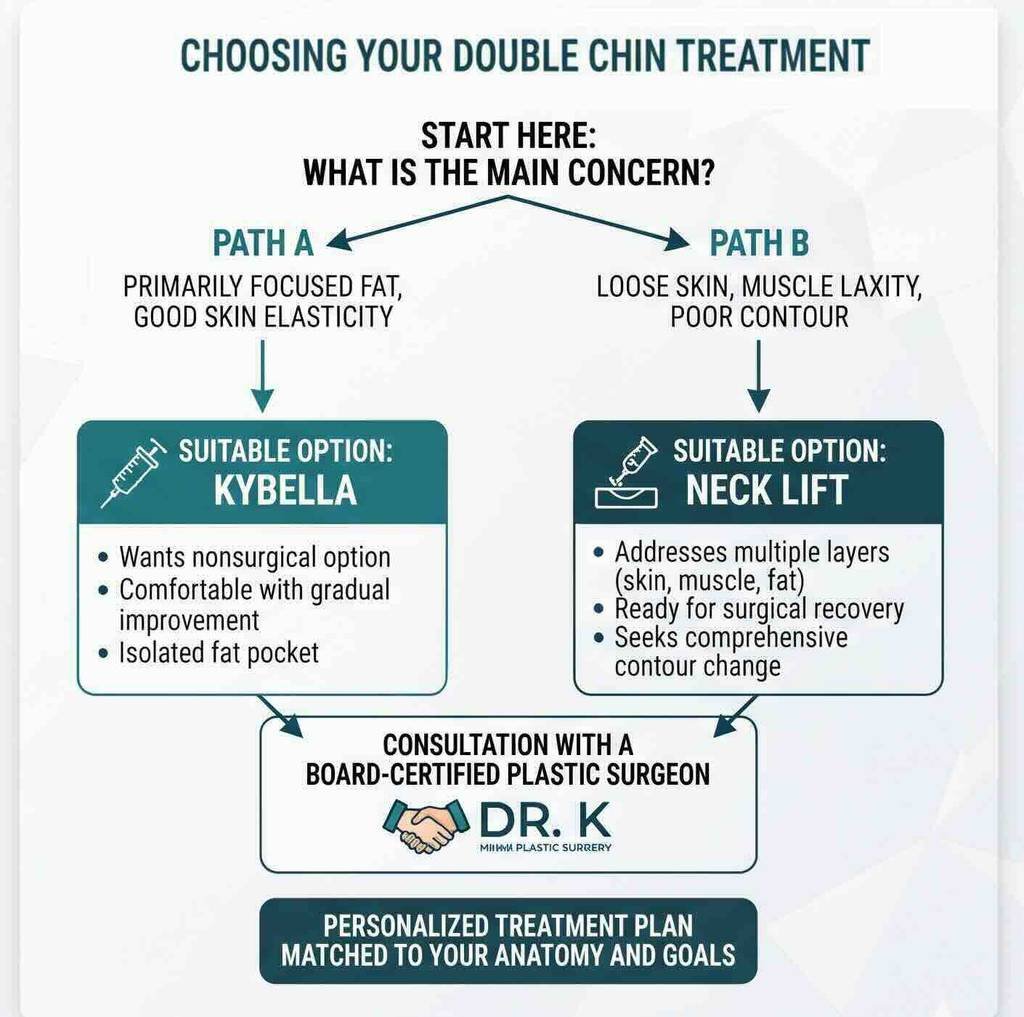
The most sensible choice usually becomes clearer after separating the desired result from the procedure’s reputation. Do you want modest reduction of a localized fat pocket, or a broader change in loose skin and neck definition? Are you prioritizing minimal downtime, or are you willing to recover longer for a more comprehensive correction?
Both paths can be reasonable when selected carefully. The decision should reflect your anatomy, health, schedule, budget, and tolerance for injections or surgery. It should also leave room for a provider to recommend against a treatment if it is unlikely to meet your goals.
When a nonsurgical approach may make sense
A nonsurgical approach may make sense when submental fat is the main concern, skin quality is relatively good, and gradual improvement is acceptable. It can also suit someone who wants to avoid incisions and a longer surgical recovery. The tradeoff is that injections may require multiple visits and will not correct pronounced laxity.
This option is best understood as targeted fat reduction rather than a general neck lift in injectable form.
When surgery may provide a more complete correction
Surgery may provide a more complete correction when loose skin, muscle laxity, neck bands, excess fat, and jawline definition all contribute to the appearance. By working on more than one layer, a neck lift can address concerns that an injectable cannot reach.
The greater scope comes with greater commitment. Incisions, anesthesia, recovery, and surgical risk must be weighed alongside the potential contour improvement. A surgeon should explain whether the proposed operation is limited to the neck or whether another area would affect the overall balance.
Whether combining treatments is possible
Combining treatments may be possible in selected cases, but it should never be assumed. The safety and usefulness of combining procedures depend on anatomy, timing, treatment areas, medical history, and the provider’s plan. Sometimes one well-chosen procedure is enough; sometimes staged treatment is more appropriate.
A combined plan should have a clear purpose for each component. If an additional treatment does not address a defined concern, it may add cost and recovery without meaningful benefit. The safest approach is to discuss sequencing openly and allow the provider to explain the reasoning.
Questions to ask during a consultation
A productive consultation should leave you with a clear understanding of the diagnosis, options, and tradeoffs. Bring photographs or notes about your goals if they help you describe the change you want. You may also want to ask:
- What is causing the fullness or laxity in my neck?
- Which part of my concern can this treatment realistically improve?
- How many sessions or what surgical steps might be needed?
- What will recovery look like for my work and exercise schedule?
- What risks, alternatives, and follow-up care should I consider?
The answers should be specific to your anatomy rather than based only on a standard treatment description. At Dr. K Miami Plastic Surgery, the consultation is intended to support personalized planning and a safe, comfortable patient experience. Taking time to understand the recommendation is part of making the decision with confidence.
Conclusion
Kybella and neck lift surgery solve different versions of the double-chin concern. Kybella may suit localized submental fat with relatively good skin quality, while a neck lift may be better when loose skin, muscle laxity, or broader contour changes are present. A thoughtful consultation can help you choose the treatment whose results, recovery, and risks fit your goals.