

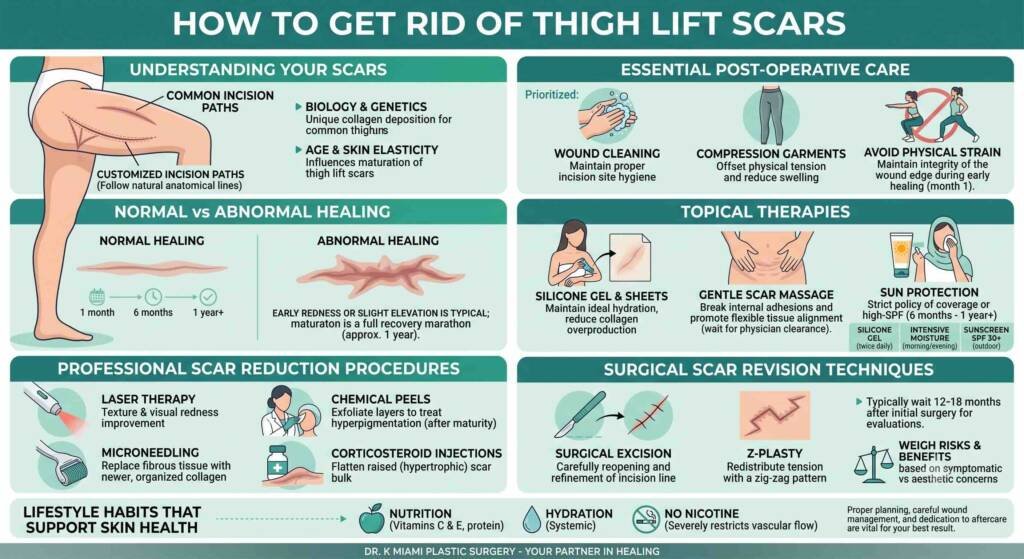
The incision pattern for a thigh lift is determined by the specific areas of sagging skin a patient wishes to address. At Dr. K Miami Plastic Surgery, Dr. Bart Kachniarz customizes each approach, whether it involves a medial incision for inner thigh contouring or a circular pattern for more comprehensive skin removal. The path of these incisions is crafted to follow natural anatomical lines, ensuring the closure rests in a stable location that minimizes motion-related tension.
Biological factors influencing individual scar formation
The way a scar matures is inherently tied to an individual’s unique biological makeup and genetic predispositions. Collagen deposition varies from person to person, meaning some patients may experience a rapid, subtle fading of the incision line, while others notice a more prolonged period of redness. Age, skin elasticity, and previous wound healing experiences provide our team with valuable insight into how your tissues will likely respond to the surgical correction.
Distinguishing between normal and abnormal scarring
While some degree of textural change is standard after any thigh lift procedure, most patients achieve a calm and thin line as the skin heals. It is worth noting that early redness or slight elevation is a typical phase rather than a complication. We carefully monitor for signs of abnormal healing, such as excessive spreading or hardening, to ensure that interventions are suggested only if needed for aesthetic refinement.
The anticipated timeline for scar maturation
Scar maturation is a marathon, not a sprint, requiring patience throughout the full recovery window. In the first few months, the body works to reorganize collagen, which is why incisions may look vivid or slightly puckered. By the one-year mark, most patients reach a point of maturity where the scar has softened and blended significantly with the surrounding skin tone, allowing for a long-lasting aesthetic transformation that looks natural.
Essential post-operative care for scar minimization
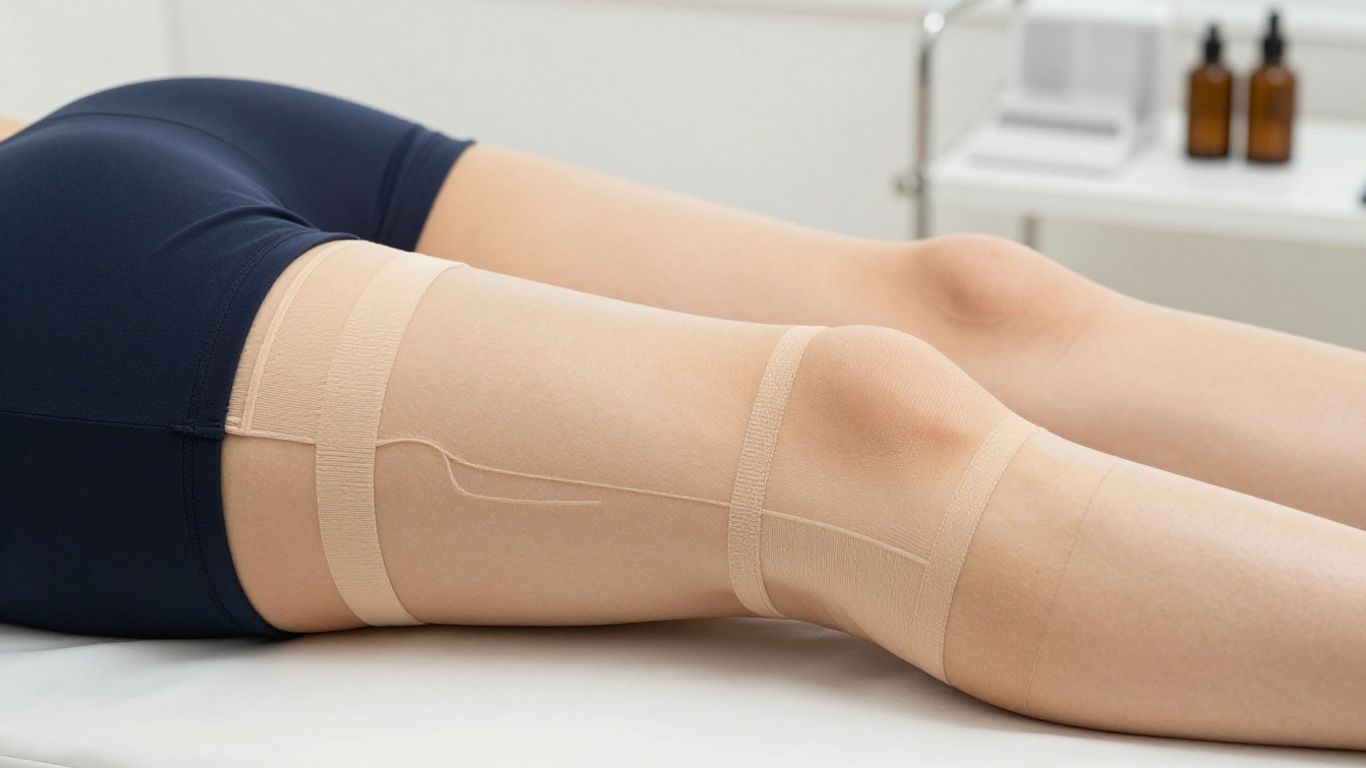
Proper incision site hygiene and wound cleaning
Effective hygiene is the foundation of successful surgical recovery and scar management. Patients must follow the specific cleaning protocols provided by our clinical team to ensure the incision stays free from debris and excess friction. Keeping the area clean allows the internal and external sutures—or skin adhesives—to support the skin edges through the initial critical phase of bonding.
The role of compression garments in tension reduction
Compression garments are essential tools that offer physical stability to the healing tissue while reducing swelling. By providing a constant, gentle pressure, these garments help offset the mechanical tension that would otherwise stretch an incision line as you move throughout your day.
Avoiding physical activities that strain the incision
Understanding the limitations of your body during the first month is a key part of our aesthetic transformation model. Patients should avoid deep squats, wide strides, or sudden leg abduction that could put stress on the groin area. Maintaining a conservative motion plan helps maintain the integrity of the wound edge during the delicate primary healing stage.
Managing edema to support uniform healing
Edema, or fluid retention, can place internal pressure on a healing incision, potentially affecting the final appearance of the scar. We recommend specific elevation strategies and lymphatic support to help your body process fluids efficiently. Managing these levels is a vital step for our patients at Dr. K Miami Plastic Surgery to ensure that tissues settle into a uniform and smooth contour.
Topical therapies and non-invasive treatments
Efficacy of medical-grade silicone gel and sheets
Many patients benefit from the application of medical-grade silicone, which creates a protective barrier over the incision. This barrier helps maintain ideal hydration levels within the scar tissue, a process that has been shown to reduce collagen overproduction and promote a flatter, less prominent scar. We encourage consistent daily use to maximize these protective benefits.
Incorporating specialized scar massage techniques
Once the skin is fully closed and the physician provides clearance, gentle massage can help break down internal adhesions and promote flexible tissue alignment. This practice helps ensure the scar remains soft rather than becoming stiff or tethered to underlying fascia. Following a specific set of movements allows the skin to remain supple as the scar continues to mature.
The importance of sun protection to prevent hyperpigmentation
New scar tissue is exceptionally vulnerable to UV damage, which can cause permanent darkening or discoloration if exposed to direct sun too early. We emphasize maintaining a strict policy of coverage or high-SPF protection for the scar area for at least six months to a year post-surgery. This diligent approach prevents the permanent contrast of dark pigmentation against your natural skin tone.
Selecting moisturizing agents for scar tissue suppleness
Keeping the surgical site well-hydrated is essential for preventing the dry, tight sensation that often occurs during the active phase of collagen remodeling. We recommend specific, non-irritating agents that provide deep moisture to the tissue without clogging the delicate pores near the incision line. Below is a summary of recommended timing for various topical interventions:
| Treatment Type | Start Timing | Frequency |
|---|---|---|
| Silicone Gel | Post-suture removal | Twice daily |
| Intensive Moisture | Morning/Evening | As needed for dryness |
| Sunscreen (SPF 30+) | After wound closure | Every 2 hours outdoors |
Selecting the right moisturizing consistency ensures that your skin remains soft and pliable as it adapts to its new shape.
Professional dermatological scar reduction procedures
Laser therapy for texture and appearance improvement
Laser treatments can be a powerful addition to the healing journey, especially when addressing visible redness or small textural irregularities. These light-based therapies work by stimulating the surrounding skin to produce higher-quality collagen while gradually reducing the blood vessel density in the scar. We often recommend these procedures to those looking to accelerate the blending process after the first six months.
Microneedling to stimulate collagen remodeling
Microneedling creates controlled micro-injuries in the skin, which encourages the body to replace old, fibrous tissue with newer, more organized collagen. For patients who feel their incision has healed but remains slightly thickened or uneven, this clinical procedure can make a noticeable difference in surface uniformity. It is a favored choice for patients who prefer a non-invasive yet highly effective path to refining their results.
Chemical peels for addressing post-surgical discoloration
If localized hyperpigmentation persists, superficial chemical peels can help exfoliate the top layers of skin, encouraging a more even tone across the area. It is important that these are performed by a professional, as the skin around a thigh lift incision is specialized and requires a precise approach to safely correct persistent discoloration without irritation.
Corticosteroid injections for managing hypertrophic scars
In rare instances where a scar becomes raised or hypertrophic, localized corticosteroid injections can help reduce the bulk of the tissue. This medicinal approach helps calm the inflammatory response within the scar, allowing it to flatten and settle in harmony with the surrounding contour. We focus on a cautious, step-by-step application of these treatments to ensure the best possible outcome for each patient.
Surgical scar revision techniques
Understanding secondary surgical excision
For some patients, a secondary procedure may be the most direct way to address a scar that has widened or become aesthetically problematic despite diligent care. Secondary surgical excision involves a careful reopening and refinement of the existing incision line to achieve a flatter, more precise closure. This step is only considered well after the tissues have fully matured to ensure the second attempt yields the desired improvement.
Implementing Z-plasty for scar repositioning
Z-plasty is a specialized surgical technique used to redistribute the tension of a scar. By creating a zigzag pattern, the surgeon can take the pressure off the central axis of the scar, which often improves its long-term appearance and flexibility. It is an excellent example of the technical artistry used at Dr. K Miami to ensure that revisions are as discreet as possible.
Timing for revision surgery relative to initial recovery
Timing is everything when it comes to revision procedures. The skin and deep tissue need adequate time to relax and mature before any further intervention is attempted. Rushing this timeline can actually disrupt the natural settling process, so we typically wait for a window of at least twelve to eighteen months before evaluating a patient for secondary surgical refinements.
Weighing the risks and benefits of secondary procedures
Every surgical decision is based on a thoughtful balance of potential outcomes and inherent risks. When considering a secondary revision, it is important to understand that the result depends on several factors, including your individual tissue healing capacity. The following list highlights key considerations our team discusses with patients:
- Whether the current scar is symptomatic or purely aesthetic in nature.
- Your personal satisfaction with the overall shape and skin tone results.
- Discussion of realistic expectations for how much a revision can improve the line.
- Evaluation of your skin’s elasticity and current lifestyle impact on healing.
Considering these elements with your surgical team ensures that any decision to move forward is aligned with your aesthetic goals and your comfort throughout the journey.
Lifestyle habits that support long-term skin health
Nutritional requirements for optimal collagen synthesis
Your internal health is reflected in your skin’s ability to repair itself effectively. A diet rich in protein, as well as vitamins C and E, provides the necessary building blocks for collagen synthesis and tissue integrity. Focusing on clean, whole-food nutrition supports the entire healing process at a cellular level, helping your skin remain resilient as it adapts to your new proportions.
Hydration and its impact on skin elasticity
Proper systemic hydration is essential for maintaining skin suppleness and elasticity after surgery. Well-hydrated skin heals more efficiently and is less prone to the tightness that can accompany scar maturation. Drinking adequate amounts of water throughout the day ensures that your body maintains the metabolic environment necessary for soft, healthy recovery.
Understanding the role of nicotine in wound vascularity
Nicotine is a well-known enemy of effective skin healing because it severely restricts vascular flow to the periphery. This constriction can deprive your surgical site of the oxygen and nutrients it needs to heal properly, potentially leading to complications. For any surgical patient, strictly avoiding nicotine well before and after surgery is a non-negotiable part of our commitment to safety.
Monitoring skin changes during the long-term maturation phase
Even after the immediate post-operative period has passed, it is wise to keep an eye on your skin as it undergoes long-term changes. Regular checks help ensure that any potential issues—like unusual redness or pigmentary changes—are addressed early. Staying connected with your clinical team allows for consistent support during every phase of your journey, ensuring your results remain a point of pride for years to come.
Conclusion
Achieving a beautiful result after a thigh lift depends on the intersection of skilled surgical execution and a commitment to thoughtful aftercare. By partnering with a team that prioritizes both artistic precision and patient support, you ensure that every step of your healing journey focuses on safety and confidence. While scar management requires patience, your dedication to the process—supported by proper hydration, protection, and professional guidance—will allow your body to achieve its most natural and toned expression.
Frequently Asked Questions
Are thigh lift scars ever completely invisible?
While scars cannot be truly removed or erased, they are designed by experts to be as inconspicuous as possible. Over time, they typically fade into thin lines that blend into the skin’s natural contours, especially when positioned in discreet areas of the body.
How soon can I start wearing swimwear after a thigh lift?
Most patients can cautiously return to swimwear once the incisions are well-healed and the skin has regained its strength, usually around the six-month mark. It is extremely important to protect the maturing scars from direct sun exposure with high-SPF sunscreen or strategic coverage to prevent lasting pigmentation changes.
Will compression garments make my scars worse?
When used correctly, compression garments are actually a major benefit to scar healing. They assist in reducing swelling and physical tension on the incision line, which is a major factor in preventing the widening of scars during the early recovery phase.
Why do my scars look redder than they did a few weeks ago?
It is completely normal for scar tissue to pass through a phase of increased redness as your body works on collagen production during the active healing months. This temporary increase in vascularity usually subsides as the scar reaches final maturation at the one-year mark.
Does genetics play a large role in how my scars heal?
Genetics is one of the most influential factors in determining how your unique skin reacts to surgical closure. While your surgical team can plan the best possible path for your incisions, your body’s individual response to inflammation and tissue closure will guide the final look of your scars.
Is it possible to hide scars with skincare alone?
Topical treatments like silicone gels and hydration agents are excellent supportive measures for softening and moisturizing scar tissue, but they are most effective when paired with careful wound management. Skincare helps optimize the texture and pigment of the scar, making it far less noticeable as it matures.
Can exercise cause my scars to widen?
Engaging in strenuous activities that put excessive tension on your thighs early in the recovery process can indeed pull on the healing skin. This is why following a gradual return to physical activity is vital, as it allows your incisions to heal and strengthen without being subjected to unnecessary pulling or shearing forces.