
Saggy skin on your stomach extends beyond cosmetics—it affects how you dress, socialize, and feel in intimate relationships. Many patients avoid form-fitting clothing and swimming situations due to loose abdominal skin following pregnancy, weight loss, or aging. Successfully addressing this condition restores physical confidence and improves quality of life, enabling patients to wear previously avoided clothing styles and participate freely in activities they once limited.
This guide presents evidence-based treatment strategies spanning lifestyle modifications, topical therapies, professional interventions, and surgical options. Treatment effectiveness depends on three primary factors: your age, the extent of skin stretching, and duration of that stretching. Younger individuals with recent, mild to moderate skin laxity typically achieve better results from non-invasive approaches.
If you’re in the Miami area considering professional treatment, Dr. K Miami Plastic Surgery offers complimentary consultations with Harvard and Johns Hopkins-trained Dr. Bart Kachniarz to determine the optimal approach for your specific situation.
What Causes Stomach Skin Sagging?
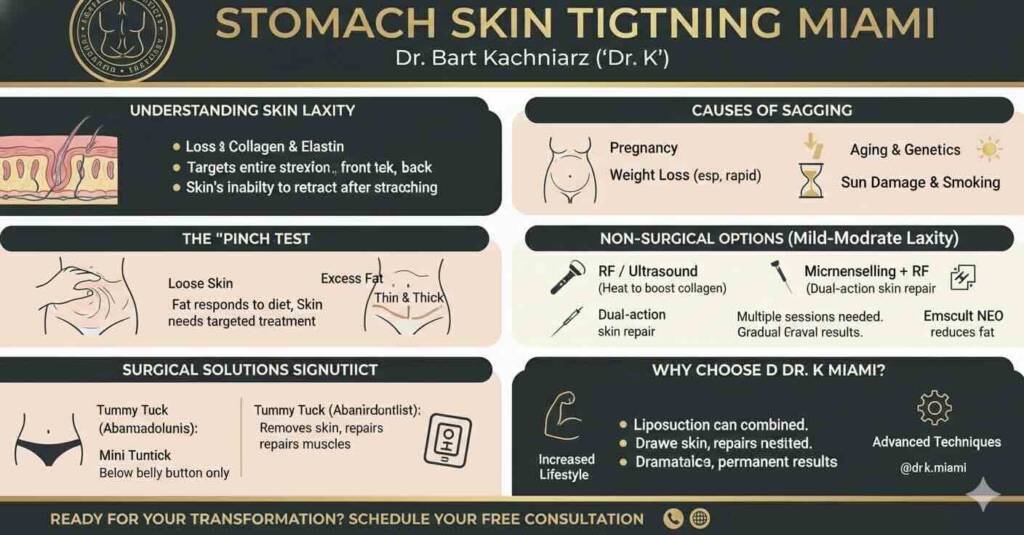
Sagging stomach skin develops when skin loses its ability to retract after stretching. This loss stems from damage to collagen and elastin—the two structural proteins responsible for skin firmness. Collagen acts as fiber-like scaffolding that maintains skin structure, comprising 70–80% of skin’s dry weight and providing tensile strength.
Elastin offers approximately1,000 times more flexibility than collagen, allowing skin to stretch and return to its original shape.
These proteins reside in the dermis, the middle, deeper layers of the skin that provide structural support. When collagen and elastin break down faster than your body replaces them, visible sagging becomes difficult to reverse through natural means alone.
How it Happens
Significant weight loss creates sagging when your body sheds fat faster than skin can contract. Rapid weight loss provides insufficient time for collagen fibers to remodel alongside changing body contours. Patients using GLP-1 receptor agonist medications experience weight reduction of 13–15% with semaglutide and 15–20% with tirzepatide.
Pregnancy stretches abdominal skin for nine months, permanently altering its structure. The sustained stretching damages collagen networks in ways that persist after delivery.
Weight cycling—repeated fluctuations—progressively compromises skin elasticity through continuous stretching and contraction cycles. Each cycle weakens the structural protein network within the dermis, similar to repeatedly stretching elastic beyond its recovery capacity.
Obesity places continuous stress on stomach skin from excess weight, while sun exposure damages skin fibers and accelerates protein breakdown. Smoking restricts blood flow and impairs natural repair mechanisms.
Medical professionals generally recommend allowing 12–24 months following weight stabilization before pursuing invasive interventions, as the skin’s natural remodeling processes continue throughout this period. Natural aging reduces collagen and elastin production by approximately 1% per year after age 20. Genetic factors determine how quickly you experience skin laxity and its severity.
Excess Skin vs Residual Fat
This distinction critically determines which interventions will prove effective. Perform a simple pinch test on your abdomen.
Excess fat feels soft and thick when pinched, with substantial tissue between your fingers. If the pinched fold measures more than a few millimeters thick, continued attention to body composition through nutrition and exercise may reveal that apparent loose skin actually represents subcutaneous fat deposits.
Loose skin appears thin and wrinkled when pinched. Patients with severe laxity describe it as having a crepey or tissue-paper quality, particularly noticeable when bending forward. True loose skin exhibits characteristics similar to thin tissue on the back of your hand—it lifts easily without substantial depth between fingers.
Body composition analysis or consultation with a medical professional provides accurate assessment. Excess fat responds to diet and regular exercise, while structural skin laxity typically requires targeted treatments.
Non-Invasive Management Strategies
Weight Management and Nutrition
Gradual weight loss of 1–2 pounds per week allows skin to adapt to body changes, giving collagen fibers time to remodel. Consistent weight maintenance after reaching a healthy size prevents repeated stretching cycles that weaken skin structure. Avoid crash diets triggering rapid changes.
Specific nutrients directly support collagen production. Protein intake remains essential—amino acids serve as building blocks for collagen and elastin synthesis. Aim for 0.8–1g of protein per pound of ideal body weight for active individuals and those strength training (the RDA for sedentary adults is 0.8g per kilogram or 0.36g per pound), distributed across meals to optimize absorption.
Healthcare providers or registered dietitians can determine appropriate targets. Vitamin C supports collagen synthesis and provides antioxidant defense against environmental damage. Omega-3 fatty acids reduce inflammation and support cell membrane integrity.
Zinc facilitates collagen production and wound healing, while Vitamin E protects skin from oxidative damage. A diet rich in lean meats, fish, eggs, nuts, seeds, citrus fruits, and leafy greens provides these nutrients naturally. Bone broth contains collagen peptides that may support skin structure.
Hydration
Adults should consume 8–10 glasses of water daily, adjusting for activity level and climate. Dehydrated skin appears less plump and exhibits reduced elasticity, making sagging more noticeable. Watermelon, cucumber, and leafy green vegetables provide supplemental hydration with vitamins and minerals supporting skin health.
Limit alcohol and excessive caffeine, as these diuretics interfere with fluid balance. Strength training builds muscle beneath skin, creating a firmer foundation that can help tighten the abdomen and reduce sagging’s appearance. While exercise cannot remove excess skin directly, it improves body composition by providing structural support from underlying muscle tissue.
Exercise
Resistance training 2–3 times per week for 30-minute sessions stimulates muscle growth when performed consistently, with development becoming noticeable within several weeks. Incorporate at least 30 minutes of moderate-intensity cardiovascular activity (brisk walking, cycling, swimming) on five days per week to support fat loss while maintaining lean muscle mass.
Compression garments provide temporary external support during weight loss or postpartum recovery. These garments apply consistent pressure to the midsection, potentially supporting skin as it adapts to body changes. While compression wear cannot permanently tighten loose skin, many individuals find it helpful for smoothing and physical comfort during daily activities.
Topical Treatments for Sagging Stomach: Home Care Options
Natural remedies offer accessible options for moderate skin laxity and serve as maintenance strategies when used consistently. These approaches cannot replicate surgical outcomes but provide modest improvements.
1. Topical Ingredients
- Retinol and retinoids stand out as the most effective topical treatments, with clinical evidence showing they stimulate collagen production and reduce visible laxity. Peptides—amino acid chains—signal collagen production. Hyaluronic acid hydrates and improves skin plumpness.
- Niacinamide (Vitamin B3) supports skin barrier function. Vitamin E provides antioxidant protection while moisturizing. Understand firming creams’ limitations: no topical formulation penetrates deeply enough to mechanically lift sagging tissue. The most noticeable improvements come from enhanced hydration, which temporarily plumps skin and reduces fine surface wrinkles. Sustained benefits require daily application, as effects diminish once use stops.
- Natural oils demonstrate mild effects. Coconut oil promotes collagen turnover and protects against photodamage. Argan oil improves elasticity through daily application.
- Avocado oil delivers vitamins A, D, and E alongside fatty acids supporting moisture retention.
- Botanical remedies offer additional support. Aloe vera gel inhibits enzymes that break down collagen fibers.
- Witch hazel extract temporarily contracts skin tissues, creating subtle tightening when applied with a cotton ball and left to air-dry.
When selecting products, avoid lanolin, which carries notably high risk of triggering allergic reactions. Researchers are exploring innovative delivery mechanisms, including formulations designed to generate mild electrical charges within skin tissue to enhance collagen synthesis beyond current ingredients.
2. Physical Techniques
Regular massage improves blood flow and may support lymphatic drainage. Dry brushing before showering stimulates circulation and exfoliates dead skin cells. Use upward, circular motions with gentle to moderate pressure. Applying natural oils during massage enhances gliding motion and delivers beneficial compounds.
Coffee scrubs combine physical exfoliation with caffeine’s vasoconstricting properties, temporarily improving blood flow while removing dead skin cells. Consistency matters more than intensity—sessions of 5–10 minutes, 3–4 times weekly, provide better results than occasional intensive treatments.
Research examining structured massage protocols demonstrates measurable improvements in skin plumpness and refinement within weeks, resulting from improved circulation and cellular stimulation.
3. Internal Support
Antioxidants protect skin cells from free radical damage accelerating collagen breakdown. Green tea contains polyphenols that shield against UV damage and slow collagen degradation. Vitamin C and E supplements provide systemic antioxidant protection.
Collagen peptides may improve skin elasticity when taken consistently. Oral hyaluronic acid supplementation (100–200mg daily) shows progressive improvements: skin hydration increases within 2–8 weeks, tone refinement occurs by 4–8 weeks, and enhanced thickness becomes measurable after 12 weeks. Topical application of brewed green tea bags complements internal supplementation.
Natural remedies work best for mild skin laxity, with results developing gradually over weeks to months of consistent use.
Professional Skin Tightening Treatments: Non-Surgical Options
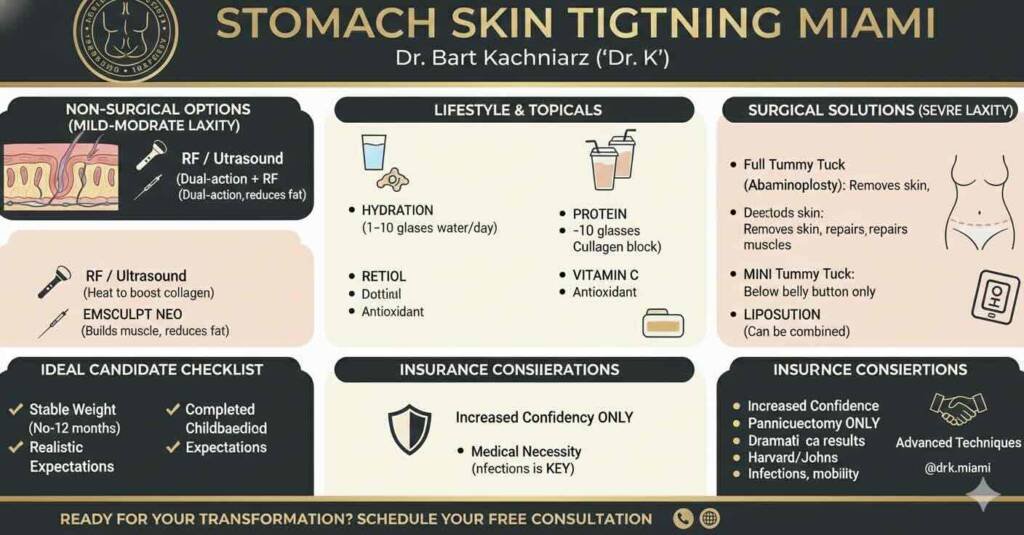
Professional non-invasive skin tightening treatments use advanced technologies to stimulate collagen production and tighten loose skin without incisions. These bridge the gap between home remedies and surgery, offering meaningful improvements for mild to moderate laxity.
Minimally Invasive Procedures
- Radiofrequency treatments deliver controlled thermal energy to deeper skin layers, heating tissue to stimulate collagen and elastin production. This triggers existing collagen fiber contraction while encouraging new collagen formation over following months. FDA-cleared options include Thermage, Profound RF, and Exilis.
- Radiofrequency-assisted lipolysis represents a more advanced approach. BodyTite uses a thin cannula inserted beneath the skin to deliver radiofrequency energy directly to targeted areas, simultaneously melting fat deposits and contracting overlying skin. This provides immediate skin contraction with continued improvement over several months.
- Ultrasound skin tightening uses focused sound waves to heat tissue at specific depths (typically 3–4.5mm below skin surface) without surface damage. The technology specifically targets the superficial musculoaponeurotic system (SMAS), a fibrous tissue layer providing structural support beneath skin. Ultherapy represents the most established ultrasound-based treatment, with FDA clearance for skin tightening.
- Microneedling with Radiofrequency combines tiny needles creating controlled micro-injuries with radiofrequency energy delivered through needle tips into deeper tissue layers. This dual-action approach stimulates both collagen and elastin production more effectively than either treatment alone. Standard microneedling can be enhanced with platelet-rich plasma (PRP) derived from your own blood.
- Acoustic Wave Therapy uses mechanical energy to break down fibrous tissue and stimulate circulation. Emtone pairs mechanical acoustic waves with simultaneous radiofrequency heating, targeting both fibrous bands beneath dimpled skin and overlying tissue quality.
- High-Intensity Focused Electromagnetic Technology primarily builds muscle rather than directly tightening skin. The muscle strengthening effect provides indirect support to overlying skin, creating firmer appearance in the midsection.
- FDA-cleared platforms like Emsculpt NEO combine electromagnetic muscle stimulation with simultaneous radiofrequency energy to address both muscle tone and subcutaneous fat reduction. The technology delivers thousands of supramaximal muscle contractions during single treatment sessions while the radiofrequency component permanently reduces fat cell populations.
- Cryolipolysis (CoolSculpting) uses controlled cooling to eliminate stubborn fat cells in the stomach area. While primarily designed for fat reduction, this treatment simultaneously promotes skin contraction as the body naturally processes frozen fat cells.
*Expectations
It must be noted that all of these treatments are for mild to moderate levels of loose skin. Only surgery can correct severe levels of sagging.
Plastic Surgery Solutions for Excess Skin
Surgical interventions provide the most dramatic and lasting results for significant sagging, particularly when non-surgical methods cannot achieve desired outcomes. These procedures physically remove excess skin and repair underlying muscle structures, offering comprehensive correction. For patients with severe skin laxity after weight loss or multiple pregnancies, surgery often represents the only viable path.
Abdominoplasty (Tummy Tuck)
Abdominoplasty addresses both loose skin and weakened abdominal muscles through surgical excision. The surgeon makes an incision from hip to hip to remove loose skin and fat, and repairs separated or stretched rectus abdominis muscles. The procedure can reposition the belly button to maintain natural proportions.
Ideal candidates include:
- Individuals with moderate to severe skin laxity
- Patients with diastasis recti (separated abdominal muscles)
- Those who have completed substantial weight loss
- Women post-pregnancy with persistent skin excess
The procedure leaves a horizontal scar along the lower abdomen, strategically placed to remain hidden beneath underwear or swimwear. For women with previous cesarean deliveries, abdominoplasty offers an additional advantage: existing C-section scars can often be excised along with removed tissue.
Mini Tummy Tuck
A mini tummy tuck targets only the lower abdomen below the belly button, offering a less extensive alternative for localized concerns. The incision is shorter than traditional abdominoplasty, and the belly button typically does not require repositioning.
The surgery takes one to two hours with less tissue manipulation than a full tummy tuck. Recovery time is shorter, with most patients returning to light activities within two to four weeks. This option works best for individuals with good skin quality above the navel and minimal muscle separation.
Liposuction Combined with Skin Removal
Combining liposuction with abdominoplasty addresses both excess fat deposits and sagging skin simultaneously, providing comprehensive body contouring. Traditional tummy tuck procedures focus on skin removal and muscle repair but do not remove significant fat layers. Liposuction removes stubborn fat pockets in the flanks, upper abdomen, and waist.
Patients with a significant amount of loose skin typically benefit more from combining liposuction with skin removal rather than pursuing liposuction alone, which may actually worsen sagging’s appearance by removing underlying volume without tightening overlying tissue. Surgeons perform liposuction first to sculpt abdominal contours, then proceed with skin removal and muscle tightening.
This dual approach extends surgical time and recovery compared to abdominoplasty alone. Swelling can take three to six months to fully resolve. The combined procedure produces more comprehensive body transformation for individuals dealing with both excess adipose tissue and skin laxity.
Making Treatment Decisions: Candidacy and Timing
Professional consultation provides accurate assessment of skin elasticity and overall candidacy for various procedures. Medical professionals examine the degree of sagging, underlying muscle integrity, and fat distribution to recommend appropriate interventions.
Consult a specialist when significant skin laxity interferes with daily activities, causes physical discomfort, or creates emotional distress affecting self-confidence. Individuals who have lost substantial weight or completed their pregnancies often benefit from professional evaluation, particularly when loose skin persists despite exercise and dietary efforts. Professional intervention becomes valuable when loose abdominal skin limits participation in social or recreational activities or presents practical challenges with clothing fit.
Assessment Factors
Professionals evaluate:
- Current skin elasticity and thickness
- Presence of separated abdominal muscles (diastasis recti)
- Overall health status and medical history
- Lifestyle factors affecting healing capacity
- Body mass index and weight stability
Medical conditions such as diabetes, cardiovascular issues, or blood clotting disorders require thorough evaluation before any treatment. Patients with implanted medical devices may have restrictions on certain non-surgical options. Lifestyle choices significantly influence outcomes—patients who maintain stable body weight, follow balanced nutritional plans, abstain from smoking, limit alcohol consumption, and consistently protect skin from sun exposure achieve superior and longer-lasting results.
Begin Your Journey to a Firmer Midsection
Your path to a firmer, more confident abdomen begins with understanding your options. Whether you’re exploring lifestyle modifications for mild skin laxity or considering professional interventions for significant concerns, the right approach exists for your unique situation.
Schedule your complimentary consultation with award-winning, Harvard and Johns Hopkins-trained Dr. Bart Kachniarz at Dr. K Miami Plastic Surgery. During your personalized consultation, Dr. K will evaluate your specific situation and recommend the most effective treatment approach for your goals.