The weeks before plastic surgery matter as much as the procedure itself. Studies show that patients who follow pre-operative protocols experience fewer complications, faster healing, and better overall results—yet many people underestimate just how much preparation influences their outcome.
Proper preparation comes down to three things: completing your medical clearance, stopping medications and supplements that interfere with surgery, and setting up your home for a smooth recovery. This guide walks you through exactly what to do at each stage, from six weeks out through the day of your procedure and beyond.
Why plastic surgery preparation matters
Preparing for plastic surgery involves three core elements: medical clearance, adjusting medications, and setting up your home for recovery. When patients follow pre-operative protocols carefully, complication rates drop significantly—and the difference between a smooth recovery and a difficult one often comes down to what happens in the weeks before surgery, not just the day of.
Most surgeons ask you to start preparing at least six weeks out. That timeline gives your body enough time to clear nicotine, allows you to complete lab work, and lets you organize your recovery space without last-minute stress.
Think of preparation as three pillars working together: getting medically cleared, stopping substances that interfere with healing, and organizing your environment. Skip one, and the others become less effective.
How to prepare for plastic surgery step by step
A countdown approach works best here. Rather than trying to remember everything at once, you can focus on specific tasks at specific times. The following timeline covers what most plastic surgeons require, though your individual instructions may differ slightly.
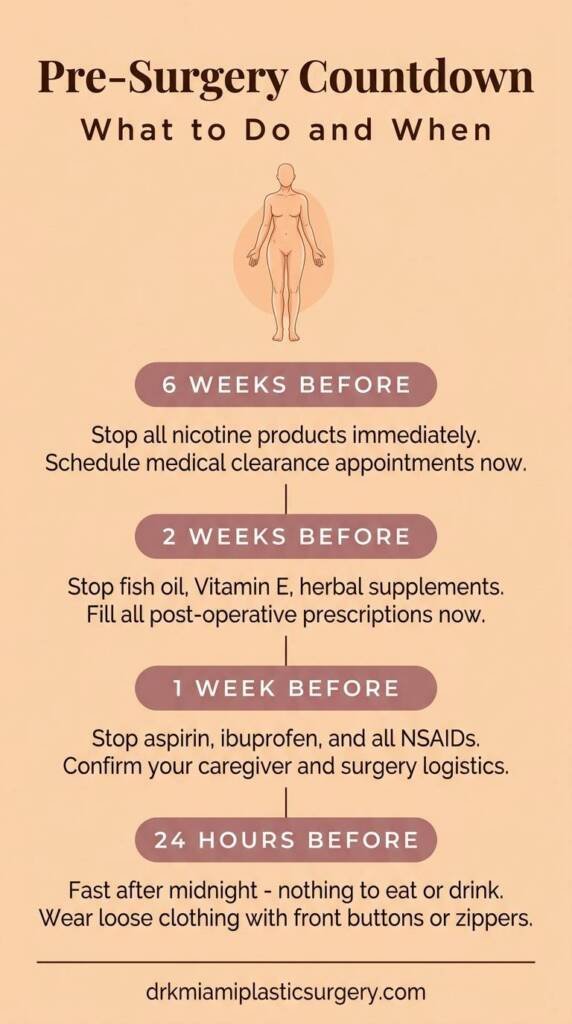
Step 1. Six weeks before surgery
This is when the biggest lifestyle changes begin. Smoking cessation tops the list because nicotine constricts blood vessels and reduces oxygen delivery to your tissues—a combination that dramatically raises your risk of skin necrosis (tissue death) and poor wound healing.
- Smoking cessation: Stop all nicotine products, including cigarettes, vapes, patches, and gums. Cellular damage can begin reversing after three weeks of abstinence, so six weeks is the minimum, though longer is always better.
- Health optimization: Eat balanced meals, drink 8–10 glasses of water daily, and maintain a stable weight close to your goal.
- Medical appointments: Schedule your primary care visit for clearance and any specialist evaluations your surgeon requests.
Step 2. Two weeks before surgery
Now you’ll start eliminating supplements and substances that can affect bleeding or interact with anesthesia. An estimated one-third of U.S. adults use herbal supplements, and many patients are surprised to learn that “natural” products can cause real surgical complications.
- Supplements to stop: Discontinue fish oil, Vitamin E, ginkgo biloba, garlic supplements, ginseng, and St. John’s Wort.
- Alcohol reduction: Begin tapering your intake or cut it out entirely.
- Prescription pickup: Fill all post-operative medications now—pain medication, antibiotics, and stool softeners—so they’re ready when you get home.
Step 3. One week before surgery
The final week focuses on stopping blood-thinning medications and confirming your logistics. Small details matter more than you might expect.
- Blood thinners to avoid: Stop aspirin, ibuprofen, Advil, Motrin, Aleve, and Excedrin. All of these prevent proper clotting.
- Logistics confirmation: Call to confirm your surgery time and verify your caregiver and driver are available.
- Home setup: Start preparing your recovery space with everything you’ll need within arm’s reach.
Step 4. Twenty-four hours before surgery
The night before and morning of surgery require strict adherence to fasting and hygiene instructions. These aren’t suggestions—they’re safety requirements that protect you during anesthesia.
- Fasting: Nothing to eat or drink after midnight, including water, unless your surgeon says otherwise.
- Shower: Wash thoroughly with antibacterial soap and shampoo your hair.
- What NOT to wear: Skip makeup, lotions, creams, nail polish, and all jewelry.
- What TO wear: Choose loose, comfortable clothing with buttons or zippers in front.
What to expect at your plastic surgery consultation
Your consultation is where preparation becomes personal. During this appointment, your surgeon reviews your medical history, discusses your aesthetic goals, performs a physical examination, and creates a surgical plan based on your specific anatomy.
You’ll leave with pre-operative instructions tailored to your health profile and chosen procedure—whether it’s a rhinoplasty, body contouring, or breast surgery.
This is also the right time to ask questions about anything that’s unclear—your surgeon expects them, and there’s no such thing as a question that’s too basic.
Medical clearance and pre-op testing requirements
Medical clearance means a physician has confirmed you’re healthy enough for surgery and anesthesia. Your surgeon will specify exactly which tests you need based on your age, health history, and the procedure you’re having.
Blood work and lab panels
Standard pre-operative labs typically include a complete blood count (CBC), metabolic panel, and coagulation studies. These tests check for anemia, infection, kidney and liver function, and your blood’s ability to clot properly.
Your surgeon’s office will provide lab orders. Results usually need to be completed within 30 days of your surgery date.
Medical clearance letters from your primary care doctor
If you have chronic conditions like diabetes, high blood pressure, or heart disease, your surgeon may require a written clearance letter from your primary care physician or specialist. This letter confirms your conditions are well-controlled and that you’re an appropriate candidate for surgery.
Imaging and specialist evaluations
Some patients require additional testing—an EKG (heart rhythm test), chest X-ray, or cardiology clearance. These are more common for patients over 50 or those with cardiovascular history, though requirements vary by surgeon and facility.
Medications, supplements, and habits to stop before surgery
What you stop taking matters as much as what you continue taking. Here’s a quick reference:
| What to Stop | When to Stop | Why |
|---|---|---|
| Aspirin, ibuprofen, NSAIDs | 7–14 days before | Increases bleeding risk |
| Herbal supplements | 2–4 weeks before | Can affect anesthesia and bleeding |
| Smoking/nicotine | 6 weeks before (minimum 2) | Impairs blood flow and healing |
| Alcohol | 48 hours to 1 week before | Interacts with anesthesia, increases bleeding |
Blood thinners and anti-inflammatories
Common over-the-counter medications like Advil, Motrin, Aleve, and Excedrin contain ingredients that prevent platelets from clumping together. That anti-clotting effect helps with headaches, but it becomes dangerous during surgery when you need your blood to clot normally.
Herbal supplements and vitamins
Vitamin E, fish oil, ginkgo biloba, garlic supplements, ginseng, and St. John’s Wort can all increase bleeding or interact unpredictably with anesthesia. Even products marketed as “natural” can cause surgical complications, and 50–70% of surgical patients fail to disclose herbal medication use to their physicians.
Smoking, nicotine, and alcohol
Nicotine from any source—cigarettes, vapes, patches, or gums—constricts blood vessels and starves tissues of oxygen. This raises your risk of wound breakdown, infection, and poor scarring. Alcohol thins your blood and can interact dangerously with anesthesia medications.
How to prepare mentally and emotionally for plastic surgery
Physical preparation gets most of the attention, but mental readiness matters just as much. Setting realistic expectations about recovery—including temporary swelling, bruising, and discomfort—helps you move through the healing process with less anxiety.
Final results take months to fully appear, so the body you see at six weeks isn’t your final outcome. Having friends or family who understand your decision makes a real difference in how you feel during recovery.
How to set up your home for recovery
Your home environment directly affects how smoothly you heal. A little advance planning prevents frustration when you’re groggy from anesthesia and limited in how much you can move around.
Recovery room essentials
Create a comfortable station where you’ll spend most of your first few days. Everything you use regularly—medications, phone charger, water, remote control, tissues—belongs within arm’s reach.
- Pillows: Multiple pillows help with elevation and positioning, especially for procedures involving the torso or face.
- Seating: A recliner is often easier than a flat bed for procedures like tummy tucks or breast surgery.
- Entertainment: Books, streaming services, and podcasts help pass the time during rest periods.
Arranging a caregiver and transportation
A responsible adult is required to drive you home after surgery—taxis and rideshares alone don’t count. This same person, or another adult, needs to stay with you for at least the first 24 hours while anesthesia clears your system.
Meal prep and hydration planning
Prepare easy, nutritious meals before your surgery date. Focus on protein for tissue repair, fiber to prevent constipation (a common issue from pain medications), and plenty of fluids.
Pre-cut fruits, soups, smoothie ingredients, and simple proteins like rotisserie chicken make eating easier when your energy is low.
What to expect the day of plastic surgery
Surgery day follows a predictable sequence: arrival, check-in, pre-op preparation, anesthesia, the procedure itself, recovery room monitoring, and discharge. The entire process typically spans several hours, though your time in the operating room varies by procedure.
Day-of checklist:
- Arrive on time with your caregiver/driver
- Bring ID, insurance card, loose clothing, and an eyeglass case
- Leave jewelry, valuables, and contact lenses at home
What to expect after plastic surgery and during recovery
Recovery unfolds in phases, each with its own characteristics. Knowing what’s normal helps you tell the difference between expected discomfort and warning signs that warrant a call to your surgeon.
First 72 hours after surgery
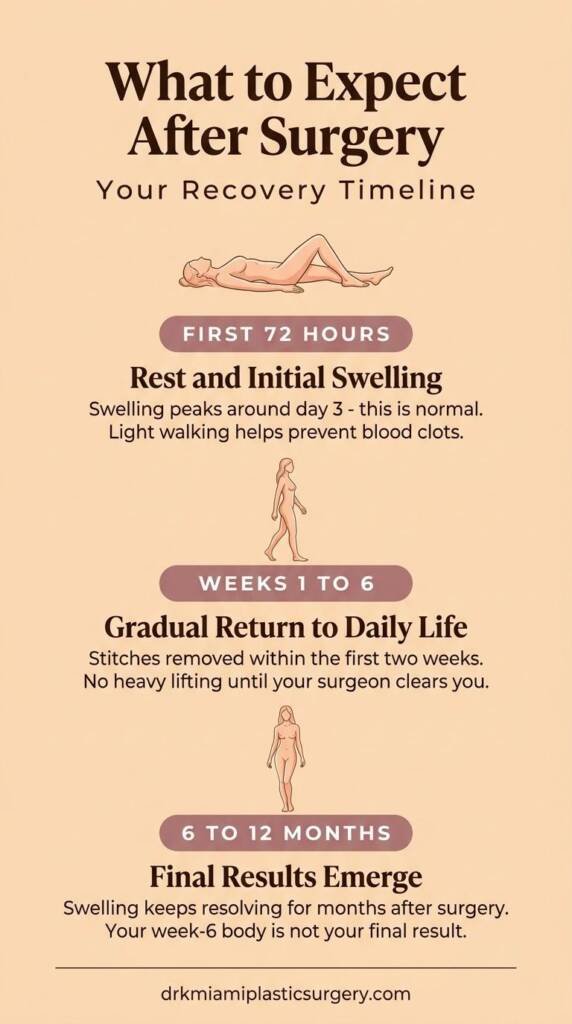
The initial three days are typically the most intense. You’ll feel groggy from anesthesia, and swelling starts building immediately. Day 3 often feels hardest because swelling peaks as your body’s inflammatory response reaches its maximum—even though you’re actually healing well.
Light walking, even just around your home, helps prevent blood clots and promotes circulation. Take pain medications as prescribed rather than waiting until discomfort becomes severe.
Weeks one through six
Gradual improvement becomes noticeable during this phase. Stitches or drains are typically removed within the first one to two weeks, and you’ll slowly return to light daily activities.
Heavy lifting, strenuous exercise, and activities that raise your heart rate significantly remain off-limits until your surgeon clears you—usually around four to six weeks, depending on your procedure. Some procedures, like a BBL, require specific post-op instructions for sitting and sleeping positions.
Long-term healing and final results
Swelling continues resolving for months after surgery. Final results for most procedures take 6–12 months to fully appear. The body you see at six weeks is not your final outcome, so patience matters.
Plastic surgery cost and financial planning
Costs vary based on procedure type, surgeon experience, geographic location, and facility fees. A typical cosmetic procedure includes several components: surgeon’s fee, anesthesia, facility fee, post-operative garments, and medications.
Many practices offer financing options that allow you to spread payments over time. During your consultation, you’ll receive a detailed quote covering all expected costs.
Travel tips for plastic surgery in Miami
Miami attracts patients from across the country and internationally. If you’re coming from out of town, travel logistics become part of your preparation.
Booking accommodations near the clinic
Plan to stay close to the clinic for your initial post-operative appointments—typically within a 20–30 minute drive. Many patients stay in Miami for at least 5–7 days after surgery, though this varies by procedure—BBL patients often stay longer due to follow-up and seating restrictions.
Recovery houses and nearby hotels familiar with post-surgical guests can provide additional support during your stay, and Miami’s year-round warm climate offers a favorable recovery environment for healing.
Flying safely before and after surgery
Arrive a day or two before your procedure to rest. After surgery, most surgeons require a waiting period before flying—often 7–14 days depending on your procedure—due to blood clot risks associated with air travel and cabin pressure changes.
Risks of skipping proper plastic surgery preparation
Cutting corners on preparation can lead to cancelled surgery, increased complications, poor wound healing, infection, or unsatisfactory results. Surgeons take preparation seriously because prepared patients consistently have better outcomes.
Following your pre-operative instructions isn’t optional—it’s the foundation of a safe procedure and the results you’re hoping for.
Start your plastic surgery journey with Dr. K Miami
At Dr. K Miami Plastic Surgery, preparation begins at your very first consultation. Dr. Bart Kachniarz and his team provide detailed, personalized pre-operative guidance and remain available to answer questions throughout your journey—from initial planning through your final follow-up.
Schedule your consultation today and begin your transformation with confidence.
Frequently asked questions about plastic surgery preparation
How painful is a tummy tuck on a scale of 1 to 10?
Most patients rate tummy tuck discomfort around 6–7 during the first few days, though prescription pain medication keeps it manageable. By week two, most patients describe it as mild soreness rather than significant pain.
What should you not do 7 days before plastic surgery?
Avoid aspirin, ibuprofen, anti-inflammatory medications, alcohol, and herbal supplements during the final week. All of these can increase bleeding risks during and after your procedure.
Why is day 3 the hardest after plastic surgery?
Swelling and bruising typically peak around day 3 as your body’s inflammatory response reaches its highest point. This makes day 3 feel more uncomfortable than the first two days, even though healing is progressing normally.
How long before plastic surgery should I stop taking vitamins?
Stop Vitamin E and herbal supplements at least two weeks before surgery. Your surgeon will provide specific instructions based on what you’re taking and your procedure type.
Can I fly home the day after plastic surgery?
No—most surgeons require you to stay locally for follow-up appointments and recommend waiting at least 7–14 days before flying, depending on your procedure and how you’re healing.