
Botox is one of the most popular cosmetic treatments in the world — but pricing can vary widely depending on where you go, how much you need, and who’s doing the injecting. This guide breaks down what Botox actually costs, what affects the price, and what to look for when choosing a provider so you get the best results for your money.
Botox costs between $300 and $800 per treatment session in 2025. The national average ranges from $10 to $20 per unit. Your total expense depends on treatment areas, required units, and injector qualifications.
What Is Botox?
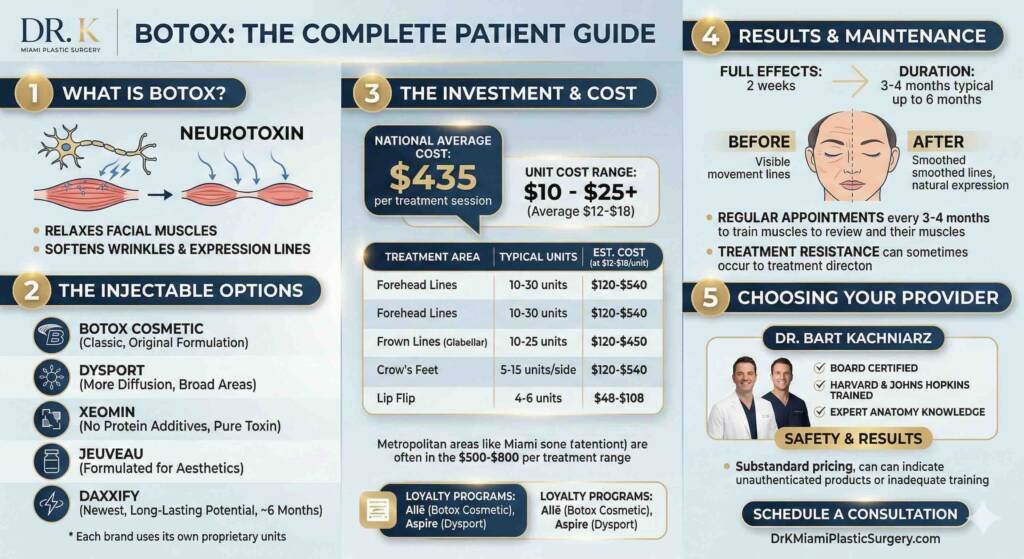
Botox is a neurotoxin that temporarily relaxes facial muscles to reduce wrinkle appearance. The injectable works by interrupting nerve signal transmission to targeted muscles, preventing contractions that form expression lines. This controlled relaxation softens existing wrinkles while skin above remains naturally mobile.
The treatment targets underlying muscle contractions creating surface wrinkles. Injections go directly into specific muscles rather than visible lines themselves.
What Botox Treats Effectively
Neurotoxin treatments work most effectively on dynamic wrinkles caused by muscle movement. Static lines from sun damage or deep creases developed over decades show limited improvement with neurotoxins alone. These cases benefit from combination treatments with dermal fillers or resurfacing procedures.
Beyond wrinkle reduction, treatments offer prevention of future line formation and a refreshed facial appearance. Visible results come with minimal recovery time and no anesthesia required.
Sessions complete in under 30 minutes with minimal discomfort. Patients can return to normal activities immediately.
Who Qualifies for Treatment
Ideal candidates maintain overall good health without active infections or significant medical conditions. Providers evaluate general health status alongside aesthetic goals during consultation to determine appropriateness.
Certain medical conditions preclude treatment. Current pregnancy, breastfeeding, and diagnosed neuromuscular disorders require providers to screen for contraindications during consultation.
FDA-Approved Neurotoxin Options
While “Botox” commonly refers to all botulinum toxin treatments, several FDA-approved brands exist:
- Botox Cosmetic: The original formulation
- Dysport: Diffuses more broadly across treatment areas
- Xeomin (incobotulinumtoxinA): Contains no protein additives, reducing antibody resistance risk
- Jeuveau (prabotulinumtoxinA-xvfs): Formulated specifically for aesthetic use at competitive pricing
- Daxxify: The newest option, offering potentially longer-lasting results
Botox Pricing Averages
Most providers charge between $10 and $25 per unit, with the majority clustering in the $12–$18 range. Understanding the different pricing models helps you evaluate costs accurately.
According to the American Society of Plastic Surgeons, botulinum toxin injections average $435 per treatment session nationally. Treatments averaging 30–40 units fall within the $420 range nationally, though individual costs fluctuate based on practitioner expertise and geographic market conditions.
Cost Per Day Analysis: A typical treatment session costing $475 and lasting four months translates to roughly $4 per day. This framework helps assess whether neurotoxin treatments align with personal spending priorities.
Per-Unit vs. Per-Treatment Pricing
Unit-based pricing provides transparency—you pay only for the precise amount of product your treatment requires. Some practices use area-based pricing, where each facial zone receives a fixed rate regardless of units used.
This model offers pricing predictability but may not account for individual variations in muscle strength. Under this structure, someone requiring 20 units pays $15 per unit for a $300 treatment, while another needing 30 units pays $10 per unit—a 50% difference for identical treatment goals.
- High-cost areas: $14–$22 per unit (New York, Hawaii, major California cities)
- Mid-range markets: $12–$17 per unit (Chicago, Dallas, Boston, Seattle)
- Lower-cost regions: $9–$15 per unit (Alabama, Arkansas, Mississippi, Wyoming)
Treatment Area Costs
Single-area treatments like forehead lines alone cost between $300 and $600. Multiple areas in one session increase costs proportionally, though some providers offer package discounts.
Treating frown lines and crow’s feet together typically requires 40 units total, costing between $480 and $720. This represents a common two-area approach addressing the most visible expression lines.
Metropolitan areas like New York, Los Angeles, and San Francisco charge $500–$800 per treatment. Miami serves as a premier aesthetic destination. Smaller markets and suburban areas typically charge $250–$450 per treatment area.
Treatment Area Requirements and Costs
Different facial areas require varying amounts based on muscle size and patient-specific factors. The number of units directly determines final treatment cost.
| Treatment Area | Typical Units | Cost Range at $12–$18/unit |
| Forehead lines | 10–30 units | $120–$540 |
| Frown lines (glabellar) | 10–25 units | $120–$450 |
| Crow’s feet | 5–15 units per side | $120–$540 total |
| Bunny lines | 5–10 units | $60–$180 |
| Brow lift | 2–5 units | $24–$90 |
| Lip flip | 4–6 units | $48–$108 |
| Chin area | 4–8 units | $48–$144 |
| Jawline slimming | 20–30 units per side | $480–$1,080 |
| Neck bands | 25–50 units | $300–$900 |
What Influences Botox Costs
Your final Botox cost depends on multiple interconnected factors beyond the treatment area itself.
Geographic Location
Urban centers like New York, Los Angeles, and San Francisco typically charge $14–$22 per unit. Smaller cities and rural areas offer rates between $9–$15 per unit. Cost of living directly impacts pricing.
Metropolitan areas with higher overhead costs—including rent, staff salaries, and insurance—pass these expenses to patients. Coastal cities generally maintain higher price points than Midwest or Southern states.
State-by-State Variations: Hawaii and Alaska rank among the most expensive at $14–$20 per unit. Alabama, Montana, and Wyoming offer lower rates at $10–$13 per unit. Even within the same state, prices fluctuate between downtown medical districts and suburban locations.
Cosmetic botox demand influences regional pricing. Cities with high concentrations of aesthetic-focused clientele support premium pricing structures.
Provider Qualifications and Experience
Board-certified dermatologists and plastic surgeons typically charge more per unit than less experienced practitioners. These specialists complete extensive training in facial anatomy and injection techniques, reducing complication risks and improving outcomes.
Experience Level: Injectors with 10+ years of experience often charge premium rates. Their expertise allows customized treatments based on individual muscle patterns and facial structure.
Training Background: Providers who regularly attend advanced courses, teach other injectors, or contribute to research in aesthetic medicine command higher fees. These credentials indicate commitment to staying current with evolving techniques and safety protocols.
State Regulations: Determine which medical professionals can legally administer neurotoxin injections. While physicians, surgeons, and dermatologists universally qualify, some states permit nurse practitioners or physician assistants to perform injections under proper supervision.
Higher fees charged by experienced specialists reflect comprehensive understanding of facial musculature and injection precision. This expertise directly influences both safety outcomes and aesthetic results.
Clinic Type and Reputation
Plastic surgery centers typically charge more due to comprehensive service offerings and surgical-grade facilities. Medical spas may offer competitive rates to attract higher patient volumes.
Reputation Impact: Establishments frequented by celebrities or featured in media outlets charge premium rates based on brand recognition. These clinics invest heavily in marketing, luxury amenities, and exclusive service experiences.
Facility Overhead: High-end clinics with state-of-the-art technology, private treatment rooms, and prime real estate locations incorporate these expenses into fee structures. Budget-friendly providers operating in lower-cost spaces charge less while maintaining quality standards.
Boutique Practices: Offer personalized experience with comprehensive care from consultation through follow-up. This individualized approach ensures optimal results and patient satisfaction.
Choosing providers based solely on lowest price point compromises both safety and treatment effectiveness. Bargain rates sometimes reflect substandard products or inadequate practitioner qualifications. Significantly discounted pricing may indicate concerns beyond competitive rates—patients should verify they receive authentic, FDA-approved neurotoxin products rather than diluted or counterfeit formulations.
Treatment Complexity
The complexity and duration of specific treatment influence pricing. Procedures requiring meticulous injection placement or treating multiple areas demand additional practitioner time and attention to detail.
Additional Cost Considerations
1. Consultation and Follow-Up Fees
Many clinics charge initial consultation fees ranging from $50–$200. Some providers credit this amount toward treatment if the patient proceeds. This fee covers assessment of facial anatomy, discussion of treatment goals, and development of personalized injection plan.
Additional costs may include follow-up appointments to evaluate results or perform minor touch-ups. Some practices offer complimentary two-week check-ins. Others charge $75–$150 for post-treatment adjustments. Clarify these policies before your first session.
2. Indirect Expenses
Parking fees, travel expenses, and time off work represent indirect costs that accumulate over multiple treatment sessions throughout the year. Urban clinics in downtown areas may have higher parking rates. Suburban locations often provide free parking.
Standard treatment supplies—including sterile needles, gauze, and protective equipment—add minimal expense per procedure. Reputable providers use fresh, medical-grade supplies for each patient to maintain highest safety standards.
3. Insurance Coverage
Insurance rarely covers cosmetic botox since it addresses aesthetic concerns rather than medical necessity. Patients pay out-of-pocket for wrinkle reduction, forehead lines, and crow’s feet treatments.
Medical Applications: Medical botox treatments for chronic migraines, excessive sweating, or muscle spasms may qualify for insurance coverage. Approved medical applications include treating overactive bladder, severe underarm perspiration, and involuntary muscle contractions.
Patients pursuing botulinum toxin for medical conditions require clinical documentation demonstrating treatment necessity and symptom severity before insurers process coverage requests. Coverage varies significantly between plans. Some cover full botox cost while others require substantial copays or deductibles.
Even when insurance approves medical botox, patients might face restrictions on provider choice or frequency of treatments. Some insurers mandate specific intervals between sessions or limit units covered per year.
Flexible Payment Plans & Promotional Pricing
Flexible payment plans through programs like Allē (powered by Cherry) help manage treatment costs by allowing patients to pay over time. Plans range from 3–24 months. These financing options often start at 0% APR for qualified applicants, making treatments more financially accessible without upfront full payment.
Many practices periodically offer promotional pricing events throughout the year. Inquiring about upcoming specials during consultation may reveal opportunities for cost savings on initial or maintenance treatments. Some clinics offer loyalty programs or package pricing for patients committing to quarterly visits.
Dosage Requirements
Botox dosing isn’t one-size-fits-all. The number of units you need depends on your unique facial anatomy, treatment goals, and the specific areas being treated.
A Botox unit represents a specific measured quantity of botulinum toxin type A. Each vial contains either 50 or 100 units. Each neurotoxin brand uses its own proprietary measurement system—one unit of Botox cannot be directly compared to one unit of Dysport or other formulations.
Practitioners calculate total treatment cost by multiplying price per unit by number of units administered. A patient receiving 20 units at $15 per unit pays $300 for that session.
Individual Dosage Factors
Treatment customization extends beyond muscle strength to encompass aesthetic preferences. Some patients prefer subtle softening that preserves natural movement, requiring fewer units. Others seek more pronounced smoothing with higher dosages.
This personalization requires collaborative dialogue between patient and injector to establish treatment parameters reflecting individual goals. Muscle Strength: Stronger facial muscles require more units; weaker muscles need less.
Starting Dosage: First-time patients often start with conservative doses that practitioners adjust in follow-up sessions based on response and satisfaction. Cost-Effectiveness: Attempting to reduce costs through insufficient dosing proves counterproductive. Receiving half the recommended units doesn’t produce half the result—it often produces minimal to no visible improvement.
How Long Results Last
Botox results typically last between 3–4 months for most patients, with some patients experiencing results up to 6 months. Daxxify, the newest neurotoxin, offers potentially longer-lasting results averaging 24 weeks (6 months). Individual experiences vary based on several factors.
Muscle Strength: Patients with stronger facial muscles notice effects fading closer to the 3-month mark. Those with less muscle activity might experience results lasting up to 6 months.
Treatment Area: Forehead lines and crow’s feet often maintain results for 3–4 months. Areas with more muscle movement may require earlier touch-ups.
Experience Level: First-time patients generally see shorter-lasting results compared to those who maintain regular treatment schedules. Initial treatments may wear off within 2–3 months rather than the typical 3–4 months seen in subsequent sessions. This shortened duration occurs as facial muscles adjust to the neurotoxin for the first time.
Lifestyle Factors: Metabolism, age, and lifestyle affect how quickly the body processes the neurotoxin. Highly active individuals or those with faster metabolisms may metabolize Botox more quickly. Sun exposure, smoking, and stress also reduce longevity of results.
Maintenance Treatment Schedule
Most patients schedule maintenance appointments every 3–4 months to sustain desired appearance. Regular treatments extend duration between sessions over time as muscles become trained to relax.
Treatment Frequency Considerations: Treatment frequency should align with when muscle movement begins to return, not when all effects have completely worn off. Scheduling the next appointment before full muscle function returns helps maintain smoother results and prevents deep lines from reforming.
Long-Term Benefits: Patients who maintain regular appointments often need fewer units per session after the first year, reducing per-treatment expenses. Staggered Schedules: Patients treating multiple areas simultaneously may benefit from staggered maintenance schedules, addressing high-movement zones like the forehead more frequently than areas requiring fewer units.
Working With Dr. Bart Kachniarz
At Dr. K Miami Plastic Surgery, Dr. Bart Kachniarz—a Harvard and Johns Hopkins-trained plastic surgeon—offers Botox treatments as part of a comprehensive aesthetic care approach in Miami, FL. Dr. Kachniarz ensures you receive treatment from a provider with elite surgical training and an artistic eye for natural results.
His boutique practice approach means personalized attention and customized treatment plans tailored to your individual facial anatomy.
Schedule Your Consultation
Ready to refresh your appearance with expert Botox treatment? Dr. Bart Kachniarz offers free consultations at his boutique Miami practice, where Harvard and Johns Hopkins training meets personalized aesthetic care.
Experience the difference of working with an award-winning plastic surgeon who takes time to understand your goals and deliver natural, beautiful results.