The surgery itself takes a few hours. The recovery? That’s where the real work happens—and where most patients have the most questions.
Breast augmentation recovery follows a predictable pattern, but knowing exactly what to expect each week makes the difference between unnecessary worry and confident healing. This guide walks you through the complete timeline, from your first 48 hours through final results at six months, including pain management strategies, activity restrictions, and the signs that everything is progressing normally.
How Long Does Breast Augmentation Recovery Take
Full recovery from breast augmentation takes about 6–8 weeks, though you’ll likely feel ready for desk work and light daily activities within 5–7 days. The catch? Your final results—when implants settle into a natural position and all swelling resolves—won’t appear until around 3–6 months post-surgery. If you’re combining procedures such as a breast lift and augmentation, expect a somewhat longer overall recovery window.
Your timeline depends partly on the implant size you choose and where your surgeon places them. Submuscular placement (under the chest muscle) typically means a longer initial recovery because the muscle itself is healing, though a 2025 meta-analysis found it reduces capsular contracture risk by 65%. Subglandular placement (over the muscle, beneath breast tissue) often allows faster early recovery. The type of breast implant you select also plays a role in your healing experience. Your surgeon will explain which approach fits your anatomy and goals during your consultation.
What to Expect in the First 24 to 48 Hours After Surgery
You’ll wake up groggy from anesthesia, and someone else will need to drive you home. This isn’t optional—you won’t be in any condition to get behind the wheel. Pain during this window is real but manageable with prescribed medication, usually a combination of pain relievers and muscle relaxants.
Here’s what the first two days typically look like:
- Compression garment: You’ll wear a surgical bra or soft compression garment around the clock to support healing
- Movement: Walking is fine and actually encouraged, but you’ll probably need help with basics like washing your hair or reaching for things
- Sensation: Expect tightness and pressure across your chest as tissues start adjusting to the implants
Breast Augmentation Recovery Week by Week
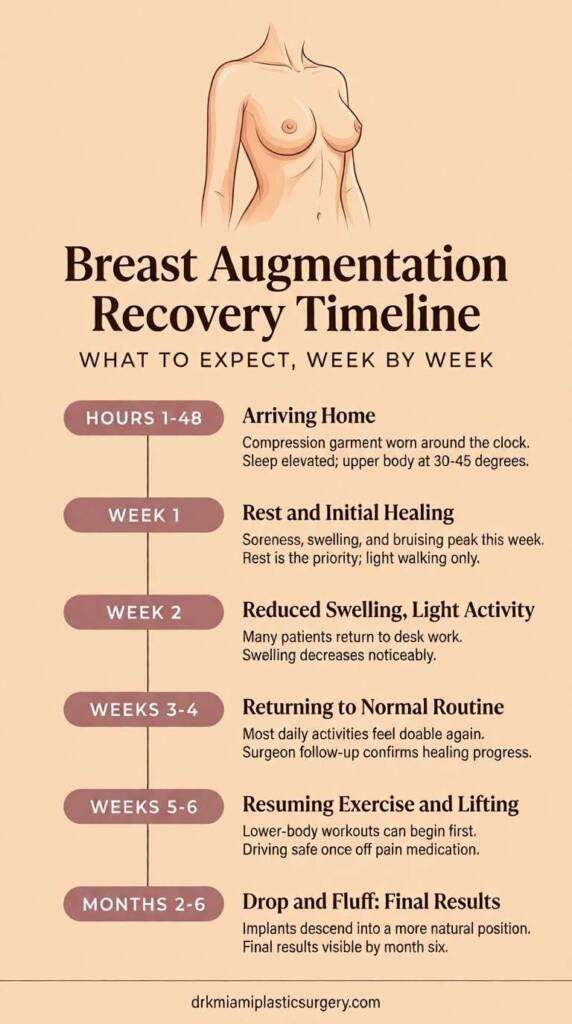
Week 1 Rest and Initial Healing
This is the hardest week. Soreness, swelling, and bruising hit their peak, and most patients rely on prescription pain medication to stay comfortable. If your implants were placed under the muscle, you’ll likely also take muscle relaxants to ease chest tightness.
Sleep on your back with your upper body elevated—a wedge pillow makes this easier. Avoid lifting anything heavier than a few pounds, and keep your arms below shoulder level. Light walking around your home helps circulation, but beyond that, rest is the priority.
Week 2 Reduced Swelling and Light Activity
By week two, things start feeling more manageable. Many patients return to desk jobs during this window, assuming they’re off narcotic pain medication. Swelling decreases noticeably, and that acute soreness shifts to general discomfort.
Keep wearing your surgical bra 24/7. You might notice itching around your incisions—this is normal and signals healing, though scratching isn’t a good idea. Walking remains beneficial, but exercise is still off-limits.
Weeks 3 and 4 Returning to a Normal Routine
Most daily activities feel doable again by week three. Swelling continues going down, and you’ll start seeing more of your actual results emerge. Your surgeon will likely schedule a follow-up appointment during this period to check how your incisions are healing and confirm your implants are positioned correctly.
Heavy lifting, intense workouts, and high-impact movements remain restricted. Even though you feel better externally, internal healing is still happening.
Weeks 5 and 6 Resuming Exercise and Lifting
Around week six, most restrictions lift. You can ease back into exercise—start with lower-body workouts before adding upper-body movements. Driving becomes safe again once you’re off pain medication and can turn and reach without discomfort.
You may also transition from your surgical bra to a supportive sports bra. Underwire bras remain off-limits for now because they can irritate incisions and affect how implants settle.
Months 2 to 6 Drop and Fluff and Final Results
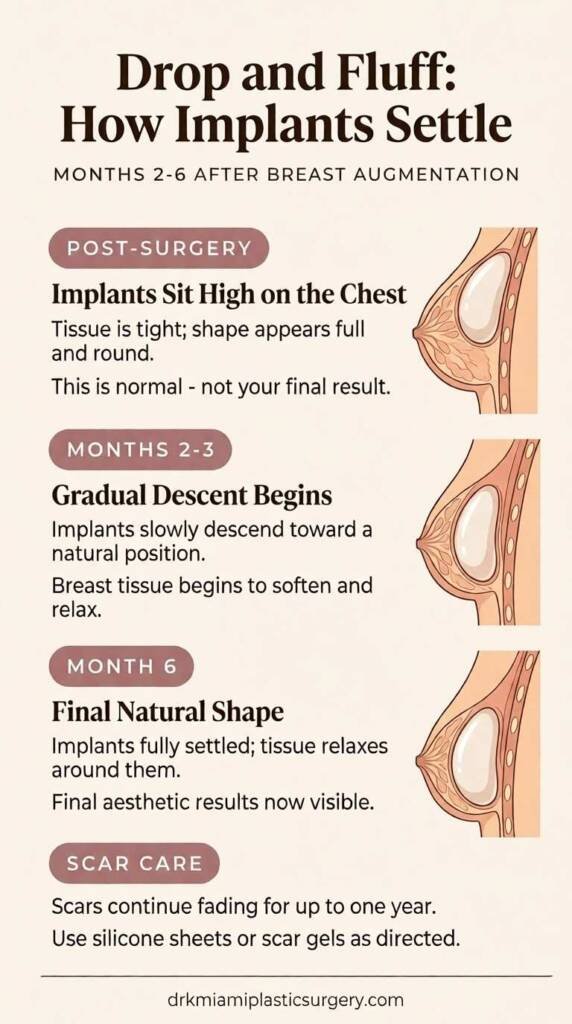
“Drop and fluff” is the informal term for what happens over these months. Your implants, which initially sit high on your chest, gradually descend into a more natural position. Meanwhile, the breast tissue softens and relaxes around them. This process is completely normal—and expected.
Final aesthetic results typically become visible by month six. Scars continue fading for up to a year, especially with proper care like silicone sheets or scar gels.
Common Side Effects During Breast Implant Recovery
Swelling and Bruising
Swelling and bruising peak during week one, then gradually fade over several weeks. One breast might look more swollen than the other temporarily—this asymmetry is normal and resolves as healing progresses.
Chest Tightness and Muscle Spasms
That tight, heavy feeling across your chest happens because skin and tissue are stretching to accommodate the implants. Muscle spasms are especially common with submuscular placement. Muscle relaxants help, and both symptoms typically resolve within the first few weeks.
Numbness and Nipple Sensitivity Changes
Temporary numbness, tingling, or a “buzzing” sensation in your breast skin or nipples is normal as nerves heal. Some patients experience hypersensitivity instead of numbness. Either way, normal sensation usually returns within weeks to months.
Itching and Incision Discomfort
Itching around incisions means tissue is healing. You might also feel mild burning or a pulling sensation at the incision sites. Keep the area clean and follow your surgeon’s wound care instructions.
Pain Management and the Most Painful Days After Breast Augmentation
Days one through three are typically the most uncomfortable. Swelling peaks, tissues are adjusting, and everything feels tight. The good news? Pain improves significantly by the end of week one.
Your pain management plan usually includes:
- Prescription pain relievers: Typically needed for the first 3–5 days
- Muscle relaxants: Especially helpful with submuscular placement to reduce chest tightness
- Over-the-counter transition: Most patients switch to ibuprofen or acetaminophen by the end of week one
- Cold compresses: Help reduce swelling when applied as directed, though not directly on skin
Pain tolerance varies from person to person. If your discomfort feels unmanageable, communicate with your surgeon—adjustments to your medication are always possible.
Tips for a Faster Breast Augmentation Recovery
1. Wear Your Surgical Bra as Directed
Your surgical bra supports implants, reduces swelling, and helps everything settle properly. Wear it 24/7 for the first six weeks, removing it only to shower. Underwire bras stay in the drawer during this entire period.
2. Sleep Elevated on Your Back
A wedge pillow or stacked regular pillows keep your upper body at 30–45 degrees. This position reduces swelling and prevents you from rolling onto your implants during sleep. Plan on sleeping this way for at least 2–4 weeks.
3. Hydrate and Eat Protein-Rich Meals
Water helps flush anesthesia from your system and supports tissue healing. Protein—lean meats, eggs, legumes—aids tissue repair. Avoid excess sodium (it increases swelling) and include fiber to prevent constipation from pain medications.
4. Walk Daily to Boost Circulation
Light walking starting on day one helps prevent blood clots and promotes healthy circulation. Start with short walks around your home, then gradually increase distance as you feel comfortable. This isn’t exercise—just gentle movement.
5. Avoid Smoking, Alcohol, and Blood-Thinning Supplements
Smoking restricts blood flow and delays healing significantly, with a systematic review finding smokers face 2× higher risk of healing delays. Alcohol thins blood and interacts with medications. Stop supplements like fish oil, vitamin E, and certain herbal products as your surgeon directs.
When Can You Return to Work, Exercise, and Daily Activities
| Activity | Typical Timeline | Notes |
|---|---|---|
| Desk work | 5–7 days | Off narcotic pain medication |
| Driving | 1–2 weeks | Full arm range of motion required |
| Light exercise | 3–4 weeks | Walking and lower-body only |
| Full exercise | 6–8 weeks | Including upper-body and high-impact |
| Heavy lifting | 6+ weeks | Nothing over 10–15 pounds before this |
Pushing and pulling motions—including vacuuming—engage your chest muscles and are best avoided for 4–6 weeks. Arranging help for household tasks during recovery makes a real difference.
Sexual activity can resume when you feel comfortable, typically after 2–3 weeks, though pressure on the breasts is best avoided. Stomach sleeping isn’t recommended for 6–8 weeks. Flying after surgery is generally safe within 1–2 weeks, but check with your surgeon first.
Potential Complications to Watch For After Breast Augmentation
Capsular Contracture and Hardened Implants
Capsular contracture happens when scar tissue around the implant tightens abnormally, causing firmness, discomfort, or visible distortion. This complication can develop months or years after surgery—the FDA notes breast implants are not considered lifetime devices—and may require revision surgery to correct.
Infection and Delayed Wound Healing
Watch for increasing redness, warmth, fever, or discharge from incisions. Proper wound care and keeping incisions clean reduce infection risk significantly. Contact your surgeon immediately if you notice warning signs.
Implant Malposition
Malposition means the implant has shifted from its intended location. “Bottoming out” describes when an implant drops too low. Following post-operative instructions—proper bra support, activity restrictions—helps prevent positioning problems.
Plan Your Breast Augmentation Recovery With Dr. K Miami
Every patient’s recovery looks a little different, which is why personalized post-operative planning matters. At Dr. K Miami Plastic Surgery, you’ll receive detailed recovery instructions tailored to your specific procedure, implant placement, and lifestyle.
Schedule your consultation to discuss your breast augmentation goals and create a recovery plan designed around your life.
Frequently Asked Questions About Breast Augmentation Recovery
What is the most painful day after breast augmentation?
Days one through three are typically most uncomfortable as swelling peaks and tissues adjust. Pain is well-managed with prescribed medication and improves significantly by the end of the first week.
How long do you have to sleep on your back after breast augmentation?
Most patients sleep on their back in an elevated position for at least 2–4 weeks. Stomach sleeping typically isn’t recommended for 6–8 weeks to protect implant positioning during the settling process.
Can you breastfeed after breast augmentation?
Many patients can breastfeed after augmentation, though this depends on incision location and surgical technique. If breastfeeding is important to you, discuss your plans during consultation so the surgical approach can be tailored accordingly.
How long do breast augmentation scars take to fade?
Incision scars appear red or pink initially and fade to lighter, less noticeable lines over 12–18 months. Proper scar care—including silicone sheets or gels—can improve their final appearance.