

Liposuction isn’t a one-size-fits-all procedure. The technique your surgeon uses—whether tumescent, VASER, laser-assisted, or power-assisted—directly affects your results, recovery time, and whether you’ll see any skin tightening along with fat removal.
With over 300,000 liposuction procedures performed annually in the U.S., the options have expanded well beyond traditional suctioning. This guide breaks down each major technique, explains who benefits most from each approach, and walks you through how to match the right method to your body and goals.
What is liposuction and how it works
Liposuction removes localized fat deposits using a cannula—a thin, hollow tube—connected to a medical vacuum. The surgeon inserts the cannula through small incisions, then suctions out fat cells that diet and exercise haven’t been able to eliminate. Over 300,000 liposuction procedures are performed annually in the United States, making it one of the most common cosmetic surgeries.
Before any fat removal begins, your surgeon injects tumescent fluid into the treatment area. This solution contains saline, lidocaine (a numbing agent), and epinephrine (which constricts blood vessels to reduce bleeding). The fluid swells the fat layer, making it easier to remove while minimizing blood loss and post-operative bruising.
Regardless of which technique you choose, a few elements stay consistent:
- Small incisions: Usually placed in natural creases where scars won’t be visible
- Tumescent fluid: Injected first to numb the area and reduce bleeding
- Compression garments: Worn after surgery to help skin contract and control swelling
Types of liposuction techniques
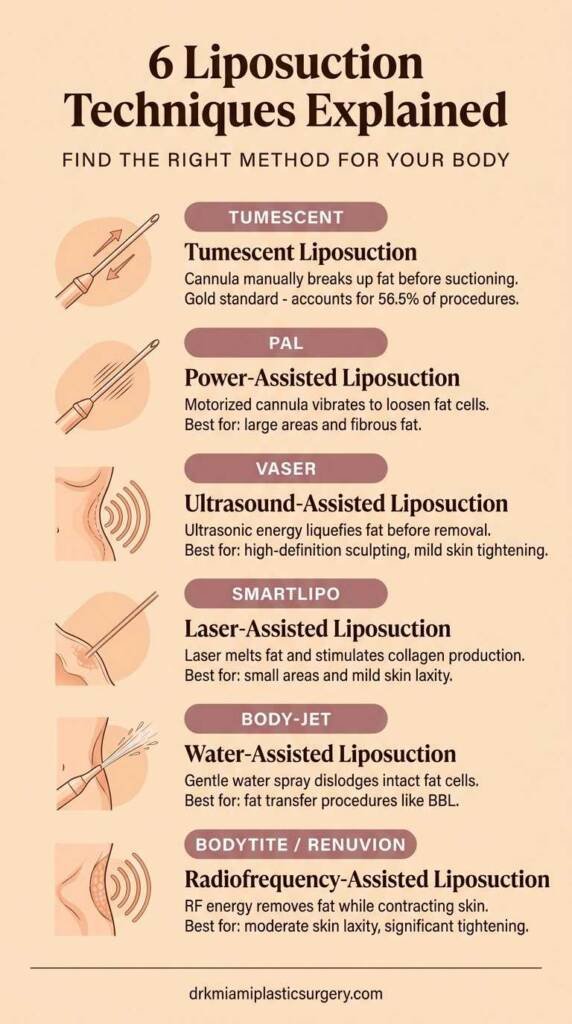
Not all liposuction is the same. The technique your surgeon recommends depends on where you’re removing fat, how much you’re removing, and whether skin tightening is a priority. Here’s what sets each approach apart.
Tumescent liposuction
Tumescent liposuction is the original modern technique and remains the gold standard, still accounting for 56.5% of all procedures performed. After injecting the tumescent solution, the surgeon manually moves the cannula back and forth to break up fat before suctioning it out.
What makes tumescent liposuction so reliable is its track record. Surgeons have been refining this approach since the 1980s, and it consistently produces predictable results with minimal blood loss. If you’re looking for straightforward fat removal without additional technology, tumescent liposuction is often the starting point.
Power-assisted liposuction (PAL)
PAL adds a motorized component to the cannula. Instead of the surgeon manually breaking up fat, the cannula vibrates rapidly—think of it like a tiny jackhammer—to loosen fat cells before suctioning.
This technique shines when you’re treating larger areas or dealing with dense, fibrous fat (common in the back, male chest, and flanks). The mechanical assistance also reduces surgeon fatigue during longer procedures, which can translate to more consistent results when multiple areas are treated in one session.
Ultrasound-assisted liposuction (VASER)
VASER uses ultrasonic energy to liquefy fat before removal. A specialized probe emits sound waves that break apart fat cells while leaving surrounding tissues—blood vessels, nerves, connective tissue—largely intact.
Two things make VASER stand out. First, it’s excellent for high-definition contouring, where the goal is to sculpt visible muscle definition rather than just remove bulk. Second, the ultrasonic energy promotes 53% better skin retraction compared to traditional liposuction, which can be helpful if you have mild laxity in the treatment area.
Laser-assisted liposuction (SmartLipo)
SmartLipo delivers laser energy through a thin fiber inserted under the skin. The laser melts fat and simultaneously heats the surrounding tissue, which stimulates collagen production. Collagen is the protein that gives skin its firmness and elasticity.
This technique works particularly well for smaller, more delicate areas—under the chin, the inner arms, the inner thighs. The skin-tightening effect is more pronounced than with traditional tumescent liposuction, though it won’t replace a surgical lift for patients with significant loose skin.
Water-assisted liposuction (Body-Jet)
Body-Jet uses a pulsating water spray to dislodge fat cells gently. Unlike laser or ultrasound techniques, there’s no heat involved, which means fat cells remain intact rather than being destroyed.
Why does that matter? If you’re planning a fat transfer procedure—like a Brazilian Butt Lift—intact fat cells survive better when reinjected. Body-Jet is often the preferred technique when harvesting fat for transfer to another part of the body.
Radiofrequency-assisted liposuction (BodyTite and Renuvion)
BodyTite and Renuvion represent the newest generation of liposuction technology. Both use radiofrequency (RF) energy to remove fat while simultaneously contracting skin through controlled heating.
The skin-tightening effect with RF-assisted liposuction is more dramatic than with laser or ultrasound. For patients with moderate skin laxity who want to avoid a traditional lift with longer incisions, RF-assisted techniques can bridge the gap. The trade-off is typically higher cost and the need for a surgeon specifically trained in these devices.
| Technique | Best For | Main Benefit |
|---|---|---|
| Tumescent | Standard fat removal | Proven safety, minimal bleeding |
| PAL | Large areas, fibrous fat | Efficiency, consistent results |
| VASER | High-definition sculpting | Precise contouring, mild skin tightening |
| SmartLipo | Small areas, mild laxity | Skin tightening effect |
| Body-Jet | Fat transfer procedures | Gentle extraction, intact fat cells |
| BodyTite/Renuvion | Moderate skin laxity | Significant skin contraction |
How to choose the best liposuction technique for your body
Picking the right technique isn’t about finding the “best” option—it’s about finding the best option for your specific situation. Your anatomy, goals, and lifestyle all factor into the decision.
Match the technique to your treatment area
Different body regions respond differently to various techniques. The abdomen and flanks, for example, often contain larger fat volumes that benefit from PAL’s efficiency. The back and male chest tend to have denser, more fibrous fat where VASER excels.
Smaller areas like the chin, arms, and inner thighs are often better suited to laser techniques that offer precision and skin tightening. And if you’re treating multiple zones in one procedure, your surgeon may combine techniques—using PAL for larger areas and SmartLipo for smaller ones.
Consider skin tightening needs
Skin quality plays a major role in your final result. If your skin has good elasticity—meaning it snaps back when pinched—you’ll likely get smooth contours with any technique. However, if you have mild to moderate laxity, techniques with built-in skin tightening (VASER, SmartLipo, BodyTite, Renuvion) can improve your outcome.
Your surgeon will assess your skin during consultation, often by pinching the treatment area to see how quickly it rebounds. This simple test helps determine whether you’ll benefit from an energy-based technique or whether traditional tumescent liposuction will work just as well.
Weigh recovery time and downtime
Recovery varies somewhat by technique, though the differences are often measured in days rather than weeks. VASER and PAL patients sometimes report less post-operative soreness because the fat is loosened before suctioning, reducing trauma to surrounding tissues.
Think about your schedule when discussing options. If you have a desk job and can work from home, you might return to work within a week. If your job is physical, plan for two to three weeks before resuming full duties.
Vet your surgeon’s experience with specific techniques
Here’s something that often gets overlooked: the surgeon’s skill matters more than the technology. A highly experienced surgeon using tumescent liposuction will typically produce better results than an inexperienced surgeon using the latest RF device.
When evaluating surgeons, ask specific questions:
- How often do you perform this technique? Look for someone who does it regularly, not occasionally.
- Can I see before-and-after photos? Review results from patients with similar body types and goals.
- Are you board-certified in plastic surgery? This confirms specialized training in body contouring procedures.
Who is a good candidate for liposuction
Liposuction works best for people who are close to their goal weight but have stubborn fat pockets that won’t respond to diet and exercise. It’s body contouring, not weight loss—an important distinction.
Good candidates typically share a few characteristics:
- Stable weight: Not actively gaining or losing, and not planning major weight changes
- Localized fat deposits: Specific areas of concern rather than overall excess weight
- Good skin elasticity: Skin that will contract smoothly after fat removal
- Realistic expectations: Understanding what liposuction can and can’t accomplish
- Good general health: No conditions that would impair healing
Liposuction may not be the right choice if you have significant skin laxity (you might need a tummy tuck or body lift instead), if your weight fluctuates frequently, or if you’re looking for dramatic weight loss rather than targeted contouring.
Risks and safety considerations of modern liposuction
Modern liposuction has an excellent safety profile—a national analysis of 246,119 procedures found an overall complication rate of 0.40% at accredited facilities. That said, it’s still surgery, and all surgery carries some risk.
Common side effects that most patients experience include bruising, swelling, and temporary numbness in the treated area. Bruising typically fades within two to four weeks, while numbness can take several months to fully resolve.
Less common complications include contour irregularities (uneven results), prolonged swelling, skin discoloration, and infection. Energy-based techniques like laser and RF carry a small additional risk of thermal injury if not performed carefully.
The single most important factor in minimizing risk is choosing a board-certified plastic surgeon who operates in an accredited facility. Accreditation means the facility meets strict safety standards for equipment, staffing, and emergency protocols.
How much liposuction techniques cost
Liposuction pricing varies widely based on several factors, and the cheapest option isn’t always the best value. Safety and results deserve priority over cost savings.
Factors that influence price:
- Technique: Advanced technologies like VASER and BodyTite typically cost more than traditional tumescent
- Number of areas: Each additional treatment zone adds to the total
- Surgeon’s experience: Expertise and reputation command higher fees
- Facility fees: Accredited surgical centers have associated costs
- Geographic location: Prices vary significantly by region
Most patients can expect to invest somewhere between $3,000 and $15,000 depending on the scope of their procedure. During your consultation, you’ll receive a detailed quote that breaks down all costs.
Liposuction recovery timeline by technique
Recovery follows a general pattern regardless of technique, though some approaches may allow slightly faster return to normal activities.
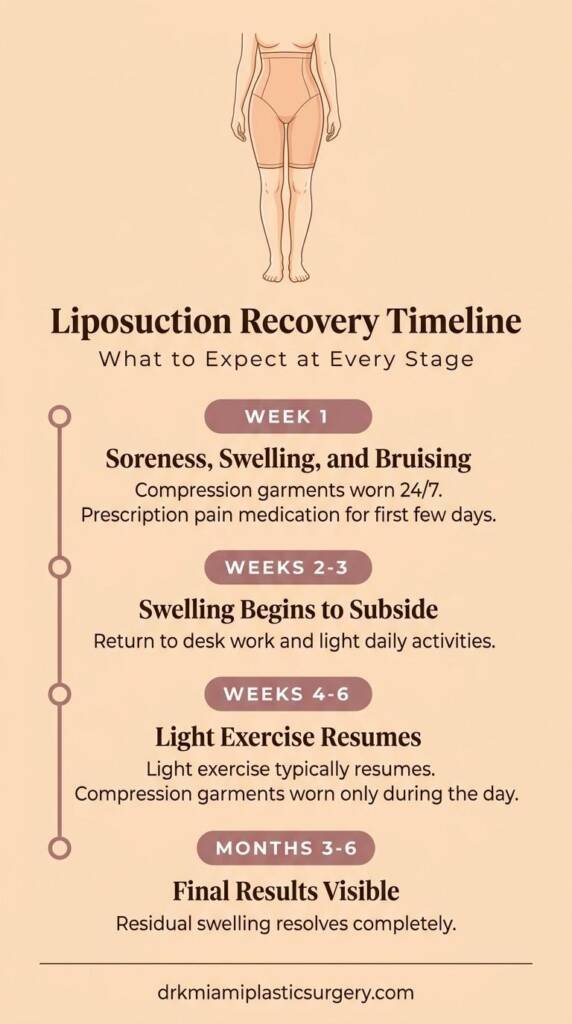
- First week: Expect soreness, swelling, and bruising. Most patients wear compression garments 24/7 and take prescription pain medication for the first few days.
- Weeks 2–3: Swelling begins to subside. Many patients return to desk work and light daily activities.
- Weeks 4–6: Light exercise typically resumes. Compression garments may be worn only during the day.
- Months 3–6: Final results become visible as residual swelling resolves completely.
VASER and PAL patients sometimes report feeling less sore in the early days because the fat is loosened before suctioning. However, individual healing varies, and your surgeon will give you personalized guidance based on your procedure.
Non-surgical alternatives to liposuction
If you’re not ready for surgery or have only minor fat deposits to address, several non-invasive options exist. Keep in mind that non-surgical treatments produce more subtle results and typically require multiple sessions.
CoolSculpting and cryolipolysis
CoolSculpting freezes fat cells, which then die and are gradually eliminated by your body over two to three months. There’s no downtime, but results are modest—typically a 20–25% reduction in fat in the treated area per session.
This approach works best for small, pinchable fat pockets. It won’t produce the dramatic contouring that surgical liposuction can achieve.
Emsculpt and radiofrequency body contouring
Emsculpt uses electromagnetic energy to trigger intense muscle contractions while also reducing fat. RF body contouring devices heat and destroy fat cells non-surgically.
Both options work well for toning and mild fat reduction, but neither can match surgical liposuction for significant volume removal or precise sculpting.
Injectable fat reduction
Kybella is an injectable treatment that dissolves fat cells under the chin. It’s FDA-approved only for submental (under-chin) fat and requires multiple treatment sessions spaced several weeks apart. Results are permanent once the fat cells are destroyed.
Find the right liposuction technique at Dr. K Miami Plastic Surgery
Choosing the right liposuction technique starts with understanding your anatomy, your goals, and your lifestyle. Dr. Bart Kachniarz offers expertise across multiple liposuction technologies and creates personalized treatment plans designed to deliver natural-looking results.
From your first consultation through your final follow-up, you’ll receive supportive care tailored to your unique journey. Schedule your consultation to discuss which liposuction technique is right for you.
Frequently asked questions about liposuction techniques
What is the safest liposuction technique?
Tumescent liposuction has the longest safety track record and remains the benchmark against which other techniques are measured. However, all modern techniques are considered safe when performed by board-certified plastic surgeons in accredited facilities. The surgeon’s experience often matters more than the specific technology used.
How much fat can be removed with liposuction?
Most surgeons follow guidelines that limit fat removal to approximately 5 liters (about 11 pounds) in a single outpatient procedure. Removing more than this increases the risk of complications. The exact amount that’s safe for you depends on your body size, overall health, and whether you’re having other procedures at the same time.
Is lipo 360 safer than a Brazilian butt lift?
Lipo 360—liposuction around the entire midsection—is generally considered lower risk than a BBL because it doesn’t involve fat transfer. The BBL carries additional risks related to injecting fat near major blood vessels. Your surgeon can explain the specific risk profile of each procedure during your consultation.
Why is caffeine restricted after liposuction?
Caffeine can increase bruising and swelling while also acting as a diuretic that may interfere with proper hydration during recovery. Most surgeons recommend limiting caffeine for two to three weeks after your procedure to support optimal healing.
Can multiple liposuction techniques be combined in one procedure?
Yes, surgeons frequently combine techniques to optimize results for different treatment zones. For example, PAL might be used for larger areas like the abdomen while SmartLipo addresses smaller areas like the chin. Your surgeon will recommend the best combination based on your specific anatomy and goals.