AirSculpt permanently removes unwanted fat using patented technology that requires no scalpels, no stitches, and minimal downtime. This FDA-approved body contouring procedure uses a specialized vibrating cannula to extract fat cells with precision, targeting stubborn deposits that resist diet and exercise.
The average cost of AirSculpt ranges from $5,000 to $15,000 per treatment area, with prices spanning $2,500–$24,000 depending on the body area, fat volume removed, and geographic location. Most patients invest between $10,000 and $15,000 when treating one to two areas. This positions AirSculpt above non-invasive options like CoolSculpting ($2,000–$4,000 per area) but within reach of traditional liposuction pricing.
This guide examines how AirSculpt works, what it costs, which body areas respond best, and how results compare to alternative fat removal procedures.
Understanding AirSculpt: What Is This Minimally Invasive Procedure?
AirSculpt permanently removes fat cells through a 2mm entry point using proprietary vibrating cannula technology. AirSculpt employs oscillating motion at 1,000 cycles per minute to separate individual fat cells before gentle extraction. Laser liposuction technology gained FDA approval for clinical use in 2006, representing decades of refinement in body contouring approaches.
The procedure addresses various areas of the body including the abdomen, hips, thighs, arms, back, and chin. Patients receive local anesthesia and oral sedation rather than general anesthesia, remaining conscious throughout treatment while the targeted area stays completely numb.
How Does AirSculpt Work?
The AirSculpt process begins with the surgeon marking target areas on your body. A specialized device creates a freckle-sized opening without traditional surgical incisions. The surgeon inserts a handpiece using controlled air pressure to loosen and remove fat cells individually, providing enhanced sculpting control.
Precise fat removal occurs in real-time while you remain awake. This enables continuous communication between surgeon and patient, allowing position changes that optimize contouring precision. The entire process takes 45 minutes to four hours depending on the treatment area size and the number of zones addressed.
The cannula’s oscillating motion physically separates fat cells without melting them through heat. This mechanical extraction preserves cell viability for potential fat transfer procedures while minimizing thermal damage to surrounding structures. The friction from the cannula generates controlled heat that stimulates collagen production, providing mild skin tightening benefits in treated areas.
Entry points close naturally without stitches, eliminating suture removal appointments. The 2mm opening heals into a mark resembling a small freckle rather than a visible scar.
How Much Does AirSculpt Cost?
The total cost of AirSculpt ranges from $5,000–$24,000, with most patients paying between $10,000 and $15,000 when treating one to two body areas. The average cost sits at approximately $13,433 across the United States. Entry-level pricing for compact treatment zones typically starts at $6,000, not including facility and surgical fees.
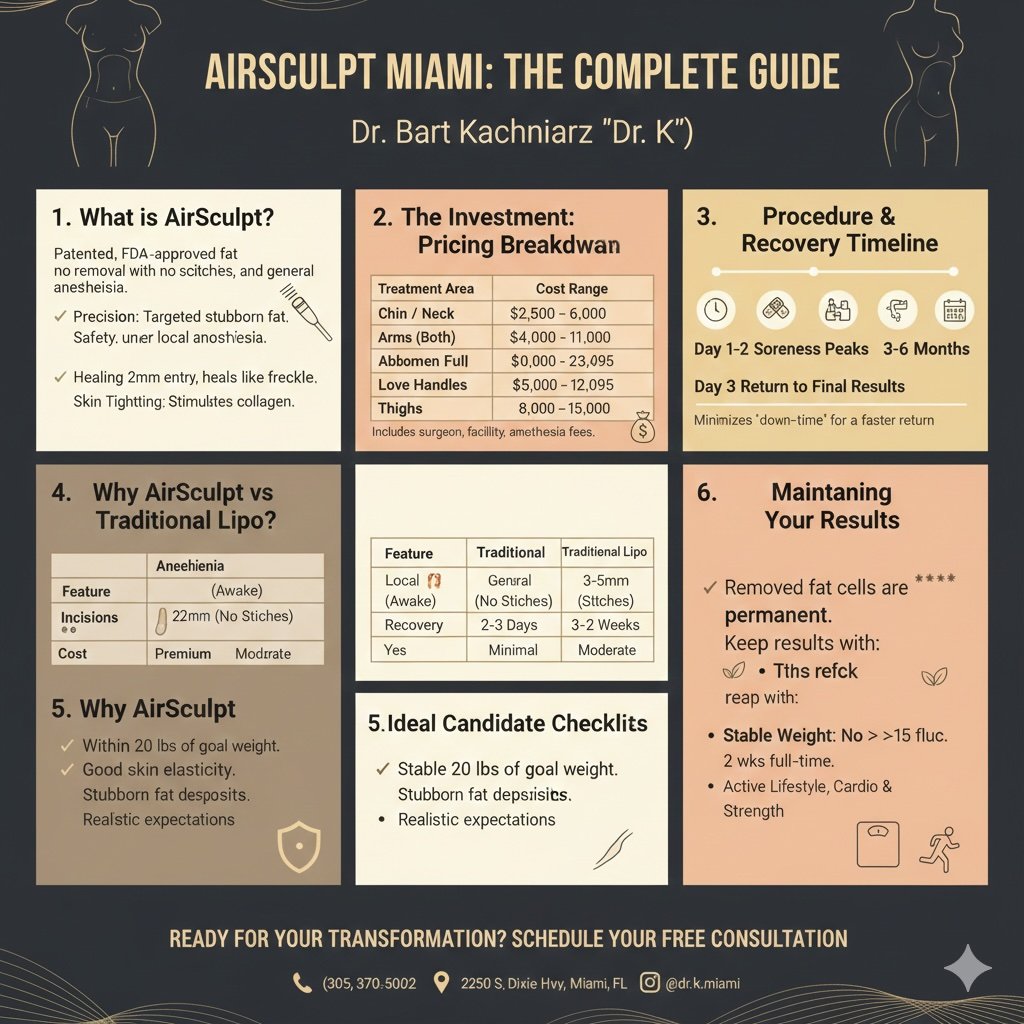
Cost Breakdown by Area Treated: Abdomen, Thighs & More
Different body areas carry distinct pricing structures based on treatment complexity and time requirements:
| Treatment Area | Estimated Cost Range |
| Chin/Submental | $2,500–$6,000 |
| Arms (per arm) | $2,000–$5,500 |
| Abdomen | $10,000–$23,495 |
| Flanks/Love Handles | $5,000–$12,000 |
| Thighs | $8,000–$15,000 |
| Back | $6,000–$14,000 |
Smaller areas like the chin represent the entry point for AirSculpt cost. Treating both arms requires doubling the single-arm price, bringing the total to approximately $4,000–$11,000. The abdomen and thighs rank among the most expensive areas due to larger fat removal volumes required.
Dr. K offers advanced arm liposuction using Vaser Lipo technology for precise sculpting.
What Factors Influence AirSculpt Cost?
Geographic location
Geographic location plays a substantial role in determining final price. Metropolitan areas with higher cost of living typically charge more than rural or suburban locations. Cities like New York, Los Angeles, and Miami often have premium pricing compared to smaller markets—higher costs reflect increased overhead expenses including commercial rent, staff salaries, medical equipment, and facility maintenance.
The amount of fat removed
The amount of fat removed directly impacts treatment duration and complexity. Procedures requiring extensive fat extraction naturally take longer to complete, increasing overall fees. Treatment duration correlates directly with procedural complexity, making larger-volume removals more expensive than smaller adjustments.
Provider expertise and reputation
Provider expertise and reputation affect pricing. A surgeon’s training credentials, years of specialized experience, and track record with body contouring procedures directly correlate with pricing. Board-certified plastic surgeons who regularly perform these procedures typically command higher fees due to their advanced skill set and ability to deliver optimal aesthetic outcomes.
The number of treatment areas selected
The number of treatment areas selected influences total investment. Combining multiple areas in one session may reduce per-area costs compared to separate appointments. Facility fees contribute to overall cost structure, covering operational expenses and medical equipment.
Compression garments
Medical-grade compression garments represent an essential but additional expense for achieving optimal results—patients should budget approximately $50–$150 for these specialized garments. These garments support proper healing, reduce swelling, and help achieve optimal contouring results. Over-the-counter pain medications typically cost $10–$20, though prescription options may carry higher prices if required based on individual pain management needs.
Facility fees
Facility fees cover the use of outpatient surgical centers and medical supplies. These charges vary by location and are sometimes itemized separately from the procedure cost.
What to ask for when looking into pricing?
Request itemized quotes detailing every component of treatment cost. Clarify upfront whether follow-up appointments and recovery garments are included in the quoted price, as these items sometimes carry separate charges at certain practices. Before committing to treatment, discuss how your provider handles potential revision procedures—understanding financial terms for addressing post-treatment concerns like asymmetry or contour irregularities helps patients budget appropriately and avoid unexpected expenses.
Insurance does not cover AirSculpt since it is considered an elective cosmetic procedure—patients are responsible for the full cost out of pocket. Some providers offer promotional pricing or seasonal discounts that can reduce total investment.
Pricing varies based on individual treatment plans. During your free consultation at Dr. K Miami Plastic Surgery, we’ll provide a personalized quote based on your specific goals.
Which Body Areas Can AirSculpt Treat?
AirSculpt addresses multiple body zones where fat accumulates and resists traditional weight loss methods. The procedure’s precision makes it particularly effective for targeting localized deposits that remain resistant to diet and exercise.
Commonly Treated Body Areas
The abdomen ranks among the most frequently requested treatment areas for AirSculpt procedures. Patients often seek fat removal from the upper and lower abdomen to achieve a more contoured midsection.
Upper Body Areas:
- Chin: Removes submental fat and enhances jawline definition
- Arms: Eliminates fat deposits on upper arms
- Bra roll: Targets fat that creates bulges around the bra line
- Buffalo hump: Addresses fat accumulation at the base of the neck
- Love handles: Contours the flanks and waistline
Lower Body Areas:
- Inner thigh: Reduces friction and creates leg definition
- Outer thigh: Smooths saddlebag areas
- Lower back: Removes excess fat above the waistline
- Buttocks: Sculpts and lifts for improved shape
- Knee: Eliminates fat pockets around the kneecap
- Pubic area: Reduces prominence in the mons pubis region
The hips, thighs, and flanks represent popular treatment zones for patients seeking improved body proportions. Each area requires specific technique adjustments based on fat density and skin quality present.
Dr. K specializes in tummy tucks and mommy makeovers for comprehensive abdominal contouring.
Areas Resistant to Diet and Exercise
Certain body regions retain stubborn fat deposits regardless of lifestyle modifications. The chin and neck area commonly develop excess fat that persists despite weight loss efforts, creating an aged or heavy appearance.
The love handles and lower back frequently hold onto fat cells that prove unresponsive to cardiovascular exercise and core strengthening. These flanking areas can disrupt the natural waistline contour even in physically fit individuals.
The inner thigh and knee regions often accumulate localized fat that remains unchanged with leg exercises. Women particularly experience this phenomenon in the thigh area due to hormonal fat distribution patterns.
The pubic area, bra roll, and buffalo hump represent specialized zones that rarely respond to general fitness routines. These areas benefit from targeted fat removal since no specific exercise can reduce fat in such localized spots. Genetics and hormonal factors largely determine fat storage patterns in these resistant zones.
AirSculpt vs. Other Fat Removal Methods
AirSculpt differs from traditional cosmetic surgery approaches through its use of smaller incisions and localized numbing rather than general anesthesia. The procedure stands apart from non-invasive options like CoolSculpting in its ability to remove larger volumes of fat in a single session.
AirSculpt vs. Traditional Liposuction
Traditional liposuction represents a well-established cosmetic surgery technique that removes fat through larger incisions, typically 3–5mm in diameter. The procedure usually requires general anesthesia and involves a cannula that manually breaks up fat deposits before suctioning them out.
AirSculpt uses incisions measuring only 2mm and operates under local anesthesia with the patient awake. The technology employs air pressure to dislodge fat cells before removal, resulting in less tissue trauma. AirSculpt offers shorter recovery time, typically spanning 48–72 hours compared to one to two weeks for traditional liposuction.
Cost comparison:
- Traditional liposuction: $3,000–$7,000 per area (average cost is $4,711)
- AirSculpt: $5,000–$11,000 per area
The precision of AirSculpt comes from thinner cannulas and automated technology, though surgeon experience remains important for both methods. Traditional liposuction may cost less for patients treating multiple large areas simultaneously.
AirSculpt vs. CoolSculpting
CoolSculpting uses cryolipolysis to freeze fat cells without surgery or incisions. The body naturally eliminates frozen cells over two to four months, with full results appearing after multiple treatment sessions.
AirSculpt removes fat immediately during the procedure, with results visible within days once swelling subsides. Cryolipolysis treatments require no downtime but deliver modest fat reduction of 20–25% per area per session. AirSculpt can remove significantly more fat in one appointment but requires a brief recovery period.
Key comparison points:
- Treatment time: CoolSculpting takes 35–60 minutes per area; AirSculpt takes 30–90 minutes
- Sessions needed: CoolSculpting often requires 2–3 sessions; AirSculpt typically needs one
- Cost per area: CoolSculpting ranges $2,000–$4,000; AirSculpt ranges $5,000–$11,000
CoolSculpting suits patients seeking gradual improvement without any invasiveness, while AirSculpt targets those wanting dramatic, immediate changes.
What Results Can You Expect?
AirSculpt patients typically return to normal activities within 48 hours and report high satisfaction with their body sculpting results. The procedure offers permanent fat removal with minimal downtime compared to traditional liposuction.
Most patients resume daily activities within two days of their AirSculpt procedure. The second day post-procedure often presents the most challenging period. While the first day benefits from residual anesthesia effects, many individuals experience increased soreness and sensitivity on Day 2 as the numbing completely subsides—this temporary intensification typically resolves by the third day, when most patients report significant improvement in comfort levels.
Recovery duration correlates more closely with the volume of fat extracted and number of areas treated than with the specific technology used. Patients undergoing larger-volume procedures or multiple treatment zones naturally require extended healing periods. Many individuals return to desk work and light daily routines within 24–48 hours, though physical demands of specific occupations may extend this timeline.
Are Results Permanent?
AirSculpt removes fat cells permanently from treated areas. Once these cells are eliminated, they cannot regenerate or return to the same location.
Maintaining results requires commitment to a healthy lifestyle. Diet and exercise play crucial roles in preserving new body contours, as remaining fat cells can still expand with weight gain. Weight fluctuations of more than 10–15 pounds may affect the outcome.
Many patients report increased motivation to maintain healthy lifestyle habits following their procedure. The visible improvements often inspire greater commitment to exercise routines and nutritious eating patterns, creating a positive cycle that enhances and preserves surgical results. Patients who maintain stable weight through balanced nutrition and regular physical activity see the best long-term results.
For procedures involving fat transfer—such as to the buttocks or breasts—approximately 50–70% of transferred fat typically survives. The body naturally absorbs some of the transferred fat during the first few months.
When combining fat removal with transfer procedures, expect additional costs beyond the initial liposuction fee. Brazilian butt lift (BBL) enhancements typically add $6,000 minimum, while breast augmentation through fat transfer starts at $6,000, and hip contouring procedures begin around $4,500.
Is AirSculpt Worth It? Patient Satisfaction Rates
Recent patient data indicates that 91% of individuals who underwent the procedure report it as worth the investment. This high satisfaction rate reflects both the treatment outcomes achieved and patients’ appreciation for the reduced recovery requirements compared to traditional surgical approaches.
Patients frequently praise the procedure’s effectiveness and comfort level. Many highlight improved body contours and minimal downtime as major advantages over traditional liposuction. Common positive feedback includes satisfaction with precision sculpting and natural-looking results—reviewers often mention returning to work within days rather than weeks.
Some patients report concerns about cost and note that results require maintenance through healthy habits. A few individuals experience temporary numbness or minor irregularities that resolve over time. Reviews consistently emphasize the importance of choosing experienced providers and having realistic expectations.
Ideal Candidate Profile
Optimal candidates maintain stable weight within 20 pounds of their goal and possess good skin elasticity. Those with significant skin laxity or seeking dramatic weight loss may benefit more from comprehensive surgical procedures that address both fat and excess skin.
AirSculpt focuses exclusively on fat removal and does not address separated abdominal muscles—a condition known as rectus diastasis that commonly occurs during pregnancy. Patients with significant muscle separation may need to consider procedures like abdominoplasty that include muscle repair for optimal core restoration and abdominal contour.
Schedule Your Free AirSculpt Consultation with Dr. K Miami
Ready to achieve the body contours you’ve always wanted? Dr. Bart Kachniarz brings Harvard Medical School and Johns Hopkins Hospital training to his boutique Miami practice, combining advanced techniques with personalized care. Whether you’re interested in body contouring, mommy makeover, or other cosmetic procedures, Dr. K will work with you to create a customized treatment plan.
Experience the difference of boutique plastic surgery care with Miami’s award-winning surgeon.