
The lymphatic system acts as your body’s natural waste-disposal network, filtering out toxins, cellular debris, and excess fluid to keep your immune defenses strong. During surgery, however, these delicate channels are temporarily disrupted, leaving the body unable to process fluid at its usual rate. This disruption results in the swelling, puffiness, and tissue hardness many patients experience after a procedure.
How surgery impacts lymphatic pathways
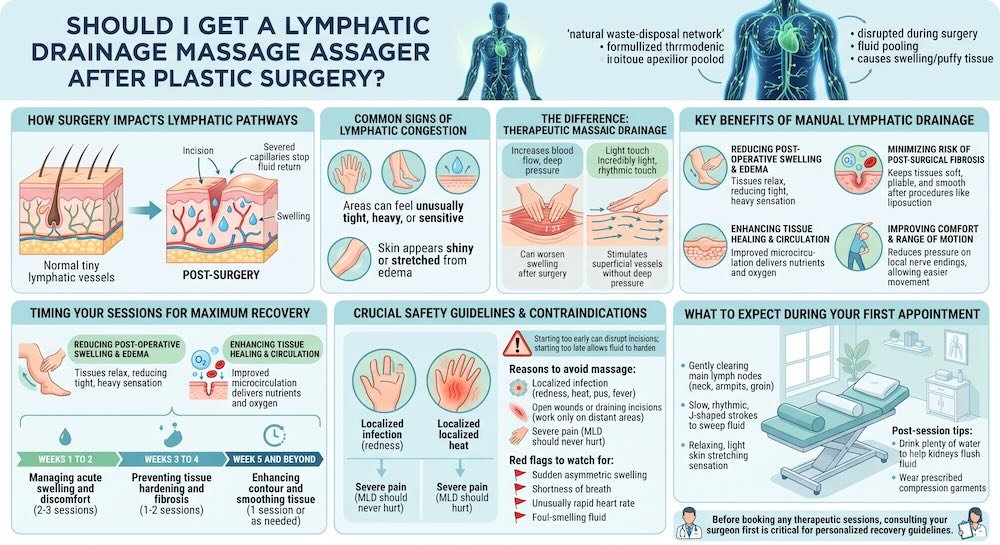
When a surgical incision is made, or when tissues are contour-sculpted during procedures like liposuction, the local microscopic lymphatic capillaries are severed. These tiny vessels normally suction up interstitial fluid and return it to the circulatory system. Without these pathways, fluid begins to pool in the open spaces left by the surgery, which is why managing this buildup is such a vital part of your recovery.
Identifying common signs of lymphatic congestion
Recognizing when your body is struggling to clear fluid is key to managing your healing timeline effectively. You might notice areas that feel unusually tight, heavy, or sensitive to the touch. This accumulation of fluid, or edema, can create a feeling of localized pressure. In some cases, the skin may appear shiny or stretched, indicating that the underlying tissues are under significant tension from blocked lymphatic fluid.
The difference between therapeutic massage and manual lymphatic drainage
It is incredibly important to understand that manual lymphatic drainage is entirely different from a standard therapeutic massage. Deep tissue work, or even standard Swedish strokes, increases local blood flow and applies heavy pressure, which can actually worsen swelling and damage healing tissues after cosmetic surgery. MLD uses an incredibly light, rhythmic touch to stimulate the superficial lymphatic vessels without dragging or putting pressure on the deeper muscles.
Key benefits of manual lymphatic drainage
Incoporating specialized post-surgical therapies is a highly effective way to support your body’s natural healing rhythm. When these light, sweeping strokes are applied correctly, they encourage the body’s internal filtration systems to kick back into gear. For many recovery plans, finding a dedicated partner in your healing process makes a world of difference.
Reducing post-operative swelling and edema
The most immediate and visible benefit of lymphatic therapy is a noticeable reduction in swelling. By clearing the congested fluid from the surgical site, the tissues can relax, which directly reduces the tight, heavy sensation. Initiating this gentle fluid movement can turn a highly uncomfortable, swollen recovery week into a much smoother path to your final results.
Enhancing tissue healing and circulation
When excess fluid blockages are cleared, oxygen-rich blood can flow more freely to the healing tissues. This improved microcirculation delivers essential nutrients and cellular building blocks to the incised areas. By keeping the circulation active through gentle techniques, your body can synthesize new collagen and repair tissues more efficiently.
Minimizing the risk of post-surgical fibrosis
After surgeries like liposuction, the body sometimes creates thick, fibrous bands of scar tissue beneath the skin. This can lead to a bumpy, uneven contour that compromises your final aesthetic result. Incorporating an early lymphatic massage in cosmetic procedures is a highly recommended strategy to keep the tissues soft, pliable, and smooth throughout the healing process.
Improving comfort and range of motion
When tissues are tight and swollen, moving around comfortably becomes a major challenge. Gently moving that fluid out of the limb or torso relaxes the skin and reduces pressure on local nerve endings. This reduction in tension allows you to stretch, walk, and perform daily tasks without the restrictive stiffness that so often accompanies the initial weeks of recovery.
Timing your sessions for maximum recovery
Getting the timing right is crucial when introducing helper therapies after a major cosmetic procedure. Starting too early can disrupt fresh incisions, while starting too late might allow fluid build-up to harden into stubborn tissue. A carefully structured timeline ensures you reap the maximum benefits without compromising your surgical site.
The importance of consulting your surgeon first
Before you book any therapeutic sessions, your primary surgeon must evaluate your incisions and overall healing. Every patient heals at a unique pace, and only your physician knows the precise details of how your internal tissues were modified. At Dr. K Miami Plastic Surgery, patients receive clear, personalized recovery guidelines that specify exactly when it is safe to begin touch therapies.
Starting during the early inflammatory phase
Many practitioners recommend starting very light lymph mobilization within the first week or two after surgery, provided there are no open wounds or complications. During this early inflammatory phase, the fluid is still relatively mobile and easy to redirect. Beginning sessions during this window helps prevent the initial swelling from reaching a peak that stretches and stresses your skin.
Adjusting session frequency based on recovery progress
In the beginning, you might benefit from multiple sessions per week to keep up with the fluid accumulation. As your swelling goes down and your body starts rebuilding its own lymphatic pathways, you can gradually reduce the frequency of your visits. To give you an idea of how a typical protocol is structured, consider this standard progression:
| Phase of Recovery | Typical Weekly Frequency | Primary Recovery Focus |
|---|---|---|
| Weeks 1 to 2 | 2 to 3 sessions | Managing acute swelling and discomfort |
| Weeks 3 to 4 | 1 to 2 sessions | Preventing tissue hardening and fibrosis |
| Week 5 and beyond | 1 session or as needed | Enhancing contour and smoothing tissue |
This schedule is highly adaptable, and your practitioner will modify it depending on how quickly your body clears the underlying fluid.
Crucial safety guidelines and contraindications
While lymphatic drainage is exceptionally gentle, it is still a physical therapy that directly influences your circulatory and immune systems. Because of this, there are strict safety guidelines that must be followed. Understanding when to pause or avoid treatment altogether is essential for preventing serious medical complications.
Identifying early signs of infection or complications
Your therapist should always check your surgical sites before starting any touch therapy. If you display signs of a localized infection, such as extreme redness, localized heat, pus, or if you run a fever, massage of any kind must be avoided. Circulating lymphatic fluid during an active infection could potentially spread bacteria through your system, which is a major medical risk.
When to avoid massage over fresh surgical sites
There are times when direct touch over your incisions must be strictly avoided. If your wounds are still draining, or if you have an open area that has not fully closed, the therapist should work only on distant, unaffected lymph nodes to draw fluid away indirectly. Working directly on top of raw, healing incisions can cause tension on the skin edges and disrupt your external scarring.
Managing expectations regarding pain levels during treatment
Many patients assume that post-surgical therapies will be painful, but true manual lymphatic drainage should never hurt. The pressure applied is incredibly light—often described as a gentle brush or pump of the skin. If you undergo a session and feel deep, painful pressure, the therapist is likely using incorrect techniques that could cause internal bruising and fluid return.
Vital red flags to watch for during the healing process
You should always keep a close watch on how your body responds both during and after a session. To ensure a safe recovery, pay attention to these critical warning signs that mean you should stop treatment and contact your surgical team immediately:
- Sudden, asymmetric swelling in only one leg or arm
- Shortness of breath or an unusually rapid heart rate
- Severe, sharp pain that does not improve with rest
- Oozing of foul-smelling fluid from your incision lines
If you experience any of these symptoms, prioritize immediate medical evaluation to rule out deep vein thrombosis or severe infection before resuming any gentle bodywork.
Credentials to look for in a manual lymphatic drainage therapist
When researching providers, look for therapists who hold specific certifications in Manual Lymphatic Drainage (MLD) from reputable organizations, such as the Academy of Lymphatic Studies or the Vodder School. These certifications require intensive coursework and hands-on testing. Utilizing a practitioner with these exact credentials ensures they know how to work safely around delicate surgical areas.
Questions to ask about their specific post-plastic surgery experience
Do not hesitate to interview potential therapists before booking an appointment. Ask them how many post-operative cosmetic patients they treat each week and whether they have worked with individuals who have had your exact procedure. A qualified professional will comfortably explain their approach, how they modify their strokes for fresh incisions, and what safety checks they perform before starting.
The necessity of adhering to surgeon-approved protocols
A great therapist will always operate in alignment with your surgeon’s guidelines. Your surgical team understands the unique structural changes made during your procedure and is ultimate authority on your physical limits. Adhering closely to surgeon-approved guidelines ensures that your post-operative massage therapies support your newly sculpted contours rather than placing unnecessary stress on internal tissue repairs.
What to expect during your first appointment
Knowing what to expect during your first lymphatic session can help ease any pre-appointment anxiety. The clinic environment should feel incredibly clean, calm, and tailored entirely to your comfort. Because you are still healing, your therapist will guide you through every step with the utmost care.
Techniques used for gentle fluid mobilization
Your session will begin with the therapist gently clearing the main lymph node basins, which are usually located in the neck, armpits, and groin. Once these central stations are open, they will use slow, rhythmic, J-shaped strokes to sweep the excess fluid toward these areas. The movement is incredibly relaxing and often feels more like a light skin stretching than a traditional massage.
Comfort measures designed for post-surgical patients
Post-operative patients often struggle to lie flat on their backs or stomachs. A specialized clinic will offer supportive pillows, bolsters, and adjustable tables to keep you in a comfortable, semi-reclined position. Your therapist will also show you how to gently move and transition on the table to avoid putting any strain on your surgical wounds.
Self-care and hydration tips for after the session
Once your session is finished, you will need to drink plenty of water to help your kidneys flush out the mobilized fluid and cellular waste. You may also notice an increased need to urinate, which is a perfectly normal sign that the therapy is working. Resting quietly, wearing your prescribed compression garments, and keeping up with walking will help maintain the fluid movement achieved during your session.
Conclusion
Integrating manual lymphatic drainage into your post-plastic surgery recovery plan can significantly elevate your overall healing experience. By gently clearing fluid congestions, reducing swelling, and preventing the formation of stubborn scar tissues, this specialized therapy helps reveal your beautiful, contoured results more smoothly. Always remember to prioritize your safety by consulting your surgeon, selecting a certified practitioner, and listening closely to your body’s signals every step of the way.
Frequently Asked Questions
Is lymphatic drainage massage painful after plastic surgery?
No, professional manual lymphatic drainage should never be painful. The technique uses an incredibly light touch to move fluid just beneath the skin, which is designed to be deeply soothing and relieve pain rather than cause it.
How soon after my cosmetic procedure can I start sessions?
Many patients can begin gentle sessions as early as the first week after surgery, but this timeline depends entirely on your specific procedure, how well your incisions are healing, and when your plastic surgeon approves the therapy.
Can I perform lymphatic self-massage at home?
While very light strokes can sometimes be done at home under guidance, it is highly recommended to see a certified professional for your initial recovery. An experienced therapist understands how to safely navigate around fresh incisions and fragile tissues.
How many sessions of lymphatic massage will I need?
Most post-surgical patients benefit from a series of 5 to 10 sessions, but the exact number depends on the extent of your surgery, the amount of fluid retention, and how quickly your body clears the swelling.
Do I need to wear my compression garments during the massage?
You will take off your compression garments for the duration of the massage session so your therapist can access the skin, but you should put them back on immediately afterward to keep the fluid from returning.
What happens if I do not get lymphatic drainage after surgery?
While your body will eventually clear the fluid on its own, skipping lymphatic drainage may cause your swelling to linger much longer and increases the risk of developing localized fluid pockets or hard, fibrous tissue contours.
Are there any risks associated with lymphatic massage?
When performed by a certified therapist, lymphatic drainage is very safe. However, risks can arise if it is done over infected areas, active blood clots, or open, unhealed wounds, which is why surgeon clearance is mandatory.