
C cup breast augmentation is the most requested enhancement size in cosmetic surgery. It delivers fuller, natural-looking results that work across every body type.
39% of people identify C cup as their preferred breast size, followed by D cup at 29%. It’s the sweet spot between subtle and striking — and the numbers back it up.
Patient satisfaction rates reach up to 98% with an experienced surgeon. At Dr. K Miami Plastic Surgery, Dr. Bart Kachniarz brings Harvard and Johns Hopkins training to every procedure. Every enhancement is tailored to your anatomy and your goals.
What size is a C Cup Breast Augmentation?
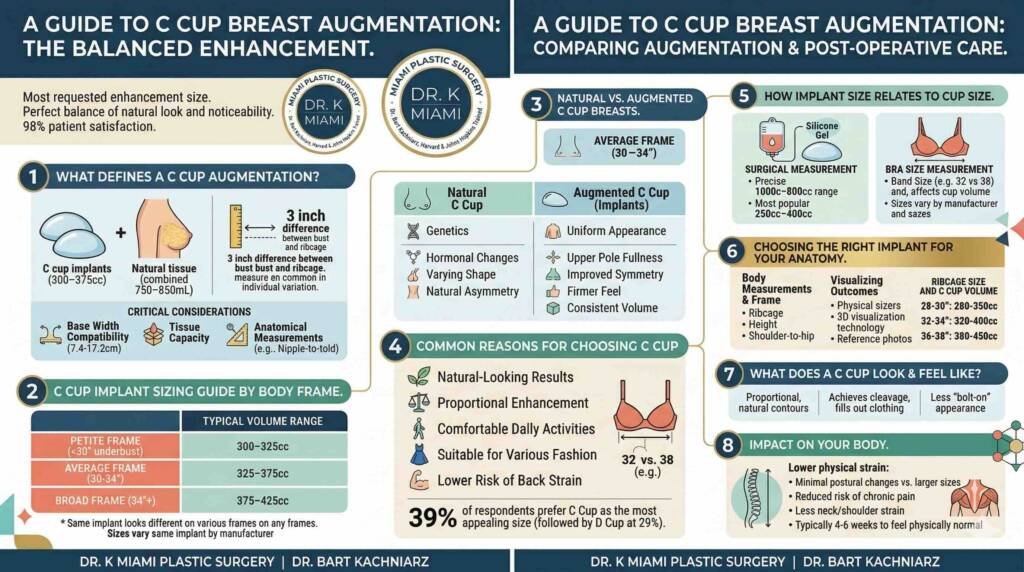
C cup breast implants typically range from 300–375 cubic centimeters (cc) in volume, creating approximately 750–850 milliliters of total breast volume when combined with natural tissue. However, the relationship between implant volume and final cup size involves complex individual factors that extend far beyond simple measurements.
Unlike bra cup size, which represents relative measurements that vary between manufacturers, surgical implants use precise cubic centimeter measurements for consistent results. A C cup indicates approximately a 3-inch difference between ribcage and bust measurements, though this correlation varies significantly based on individual anatomy and bra brand standards.
Critical sizing considerations include:
- Base width compatibility: Implants range from 7.4–17.2 centimeters in diameter and must match chest wall dimensions
- Tissue capacity assessment: Your surgeon evaluates your body’s ability to safely support implant weight
- Anatomical measurements: Nipple-to-fold distance, areolar diameter, skin elasticity, and shoulder width analysis ensure optimal positioning
Natural vs. Augmented C Cup Breasts
Natural C cup breasts develop through genetics, hormones, and body composition, resulting in varying degrees of fullness, natural asymmetry, and tissue distribution. These breasts change with weight fluctuations, hormonal cycles, and aging processes.
Main Differences:
- Shape consistency: Implants provide more uniform appearance
- Upper fullness: Augmentation creates enhanced upper breast volume
- Symmetry: Cosmetic procedures can address natural asymmetries
- Firmness: Implants typically feel firmer than natural tissue
- Longevity: Natural breasts change more with age and hormones
Augmented C cup breasts offer enhanced consistency with implants providing more uniform shape and fullness than natural breasts. The upper pole enhancement creates fullness in the upper breast area that natural breasts may lack, while improved symmetry addresses natural asymmetries effectively.
These augmented breasts maintain more consistent volume over time, though some changes occur with weight variations, and typically feel firmer than natural breast tissue. The choice between subtle enhancement and more dramatic improvement depends on individual anatomy, aesthetic goals, and personal preferences regarding breast appearance and tactile qualities.
Common Reasons for Choosing a C Cup
Some of the main reasons patients choose c cups instead of D cups are that:
- Natural-looking results
- Proportional enhancement
- Comfortable for daily activities
- Suitable for various fashion choices
- Lower risk of back strain
How Implant Size Relates to Cup Size
Understanding the relationship between implant volume and bra cup sizes requires knowledge of how surgeons measure implants versus how bra manufacturers size cups. The correlation between cubic centimeters and cup sizes varies based on individual body measurements and bra brand differences.
Cubic Centimeters (cc)
Surgeons measure breast implant size exclusively in cubic centimeters rather than cup sizes. This measurement system provides precise volume specifications that remain consistent across all manufacturers and medical facilities.
Cubic centimeters represent the actual volume of saline or silicone gel contained within each implant. This standardized measurement eliminates confusion that can arise from bra sizing inconsistencies.
The smallest available implants start at 100cc to 145cc. Most patients select implant sizes between 250cc and 400cc for natural-looking results.
Breast implants can range up to 800cc, though sizes above 500cc carry increased risks. The precision of cc measurements allows surgeons to make exact adjustments based on patient goals and body proportions.
Bra Size and Cup Size
Bra cup size represents a relative measurement that depends on band size rather than absolute breast volume. A C cup on a 32 band differs significantly in volume from a C cup on a 38 band.
Cup sizes vary widely among bra manufacturers, making direct correlations to implant volume imprecise. The same woman might wear different cup sizes depending on the brand and style of bra.
Band size affects how cup measurements translate to actual breast volume. Women with smaller frames require less implant volume to achieve the same cup size compared to women with larger frames.
This relative sizing system explains why surgeons avoid using cup sizes as primary measurements. Individual body measurements and existing breast tissue significantly influence how implant volume translates to final cup size.
Typical Implant Sizes for Achieving a C Cup
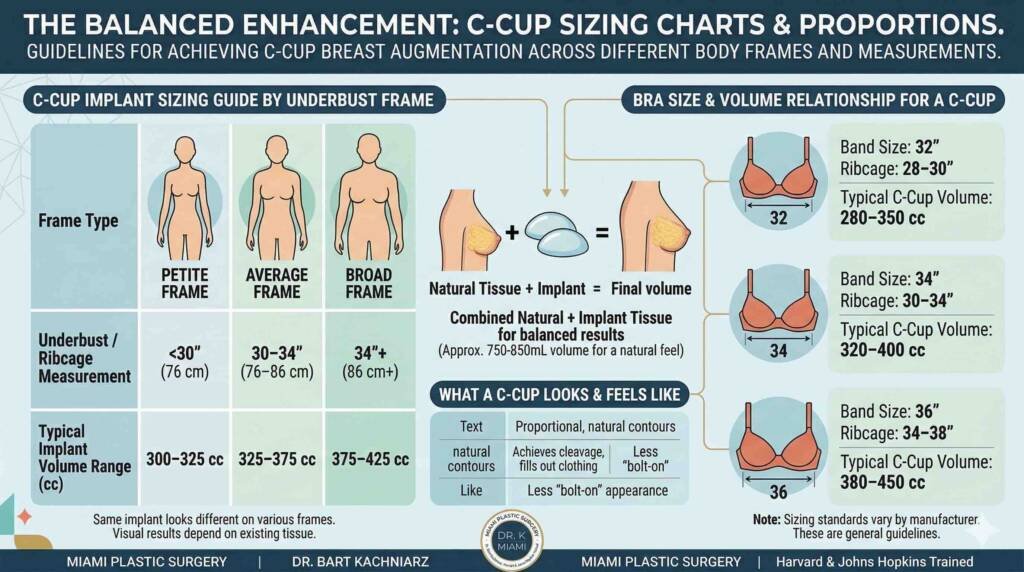
Women with average body measurements typically achieve C cup results with 300cc to 400cc implants. Smaller C cups generally require 300cc to 325cc, while fuller C cups need 375cc to 400cc.
| Target C Cup Size | Typical Implant Range |
| Small C Cup | 300cc – 325cc |
| Full C Cup | 375cc – 400cc |
Individual factors affect these ranges significantly. Women with broader chest measurements may need larger implant volumes to achieve the same cup size appearance.
Existing breast tissue also influences final results. Women with minimal natural breast tissue may require slightly larger implants to fill a C cup compared to those with more existing tissue.
The 350cc to 400cc range represents the most popular choice among patients seeking natural-looking C cup results. This volume provides noticeable enhancement while maintaining proportional appearance across various body types.
How to Choose the Right Breast Implant for Your Anatomy
Successful C cup augmentation requires thorough evaluation of your unique body proportions. Your surgeon will assess multiple anatomical factors to determine the ideal implant specifications for your desired outcome.
Body Measurements and Frame
Ribcage measurement forms the foundation for proper implant sizing, as this determines how implants will sit on your chest wall and integrate with your natural anatomy. The ribcage circumference determines band size and affects how implants position, while existing bust measurement reveals current breast volume and projection.
Your shoulder-to-hip ratio influences ideal implant size for balanced proportions. Height considerations play a role—women under 5’4″ typically achieve proportionate results with smaller volumes than those over 5’7″.
| Ribcage Size | Typical C Cup Volume Range |
| 28-30 inches | 280-350cc |
| 32-34 inches | 320-400cc |
| 36-38 inches | 380-450cc |
Slim bodies with minimal existing breast tissue show more dramatic changes from implants. These patients often achieve C cup results with moderate volumes that might appear smaller on larger frames.
How A Doctor Can Help?
Modern consultation processes utilize sophisticated tools to help patients visualize potential outcomes. Physical implant sizers allow patients to experience different volumes while wearing their own clothing, providing realistic previews of how chosen volumes will look and feel during daily activities.
Consultation methods include:
- 3D visualization technology: Creates three-dimensional simulations from multiple angles
- Physical sizer trials: Patients handle actual implant samples to understand weight and density
- Reference photo analysis: Visual examples prove more effective than cup size discussions
- Surgeon portfolio review: Viewing results from patients with similar anatomy sets realistic expectations
How Does a C Cup Actually Look?
C cup implants create proportional enhancement for most body frames without appearing overdone. For patients transitioning from smaller sizes like 34B, this represents a moderate increase that maintains natural breast contours. With that being said a C Up can look different on different frames. A woman with smaller sholders and torso will have them appear much larger than someone who has a larger frame, shoulders, torso or who might weigh more.
The breast size aligns well with the average cup size in the U.S., making it a socially comfortable choice. Women with broader shoulders or larger ribcages often find C cups provide the fullness needed to balance their frame proportions.
This size works particularly well for achieving cleavage and filling out clothing naturally. Unlike larger implants, C cups rarely create the “bolt-on” appearance that some patients want to avoid.
The enhancement typically looks proportionate whether wearing fitted tops, swimwear, or professional attire. Most patients report feeling confident that their results appear natural to others.
Impact on Your Body
C cup implants generally cause minimal impact on posture compared to larger sizes like 34DD. The moderate weight increase rarely leads to the chronic back pain and shoulder pain commonly associated with very large implants.
Most patients experience only temporary discomfort during the initial healing period. The implant weight is typically manageable for the back and shoulder muscles without requiring significant postural adjustments.
- Minimal strain on neck and shoulder muscles
- Reduced risk of developing chronic pain conditions
- Less impact on spinal alignment
- Comfortable sleeping positions return sooner
Recovery time for comfort-related issues is typically shorter with C cup implants. Patients often report feeling physically normal within 4-6 weeks post-surgery.
Long-term Care
While C cup implants provide lasting enhancement, understanding long-term care helps maintain optimal results and health.
The FDA recommends patients with silicone implants undergo their first ultrasound or MRI at 5–6 years post-surgery, then every 2–3 years thereafter. Regular follow-up appointments help detect potential issues early, while maintaining stable weight helps preserve breast shape over time.
Properly fitted supportive bras reduce stress on implants and natural tissue throughout the years. Regarding replacement considerations, implants don’t require routine replacement at predetermined intervals. Replacement is only necessary if rupture, discomfort, or aesthetic changes occur.
FDA post-approval studies show that up to 20% of primary augmentation patients and 50% of reconstruction patients had implants removed within 10 years. Many patients choose to maintain or adjust size based on lifestyle changes after 10–15 years.
Alternative Enhancement Options
For patients seeking C cup results without traditional implants, fat transfer procedures offer an alternative approach using your body’s own tissue.
Fat grafting harvests adipose tissue from donor sites through liposuction and provides modest volume increases without foreign materials. This technique typically achieves smaller C cup results through multiple sessions and appeals to patients seeking subtle enhancement with natural tissue, though it may require several procedures to achieve desired volume.
Patients must have adequate fat reserves for harvesting to be suitable candidates. Results may be less predictable than implant augmentation, with a longer overall treatment timeline due to multiple sessions required. Fat transfer is generally more suitable for patients wanting subtle enhancement rather than dramatic transformation.
Ready to Achieve Your Ideal C Cup Results in Miami?
Transform your confidence with expertly performed C cup breast augmentation at Miami’s premier plastic surgery destination. Dr. Bart Kachniarz combines Ivy League training from Harvard and Johns Hopkins with artistic vision to create results that look naturally beautiful and feel authentically you.
Experience the boutique difference at Dr K Miami Plastic Surgery, where exceptional results meet personalized care. Dr. Kachniarz personally guides you through every step of your transformation journey, ensuring your C cup enhancement exceeds expectations while maintaining the highest standards of safety and artistry.